EXHIBITION DATES : In person and online from 17/7 – 4/9

INTRODUCTION :
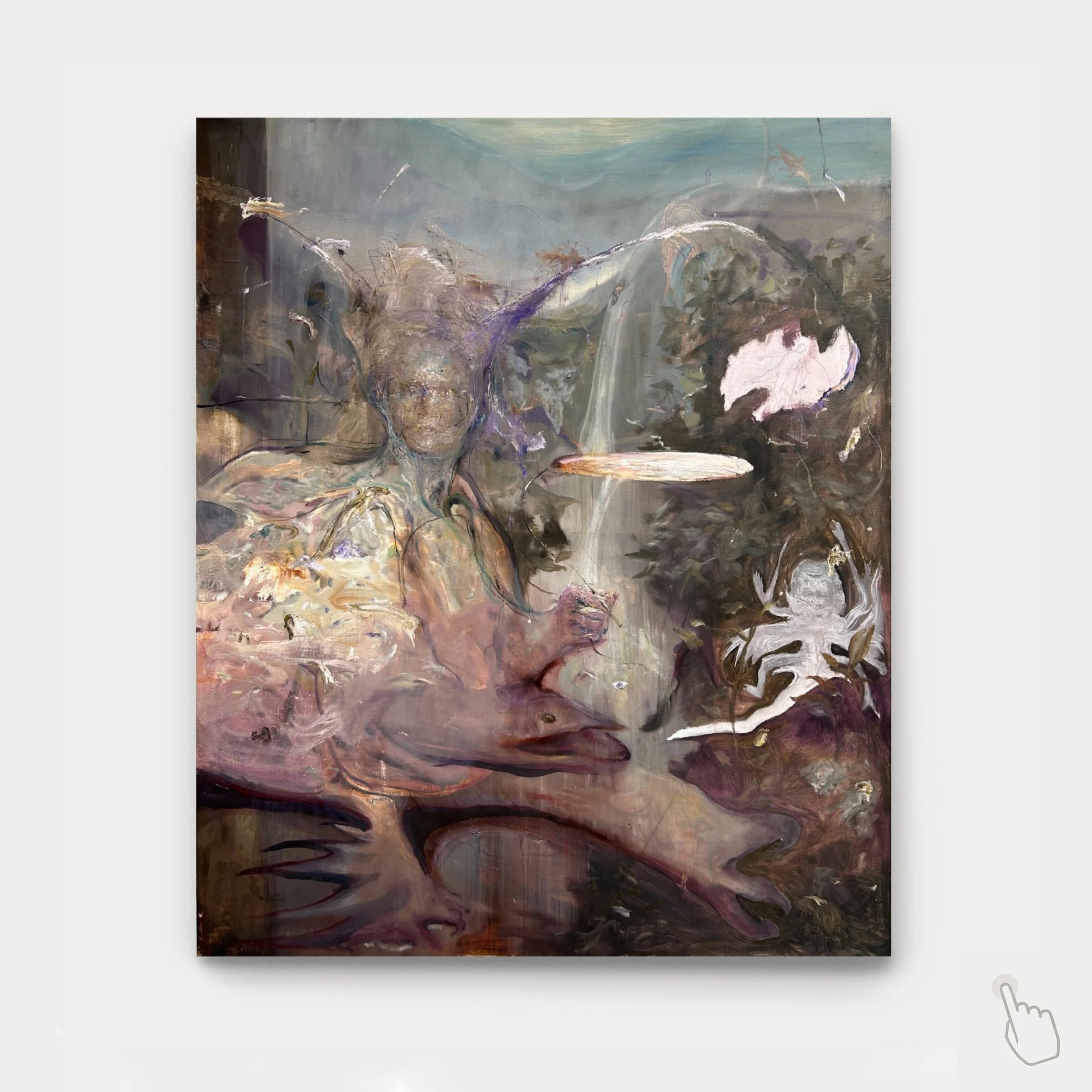
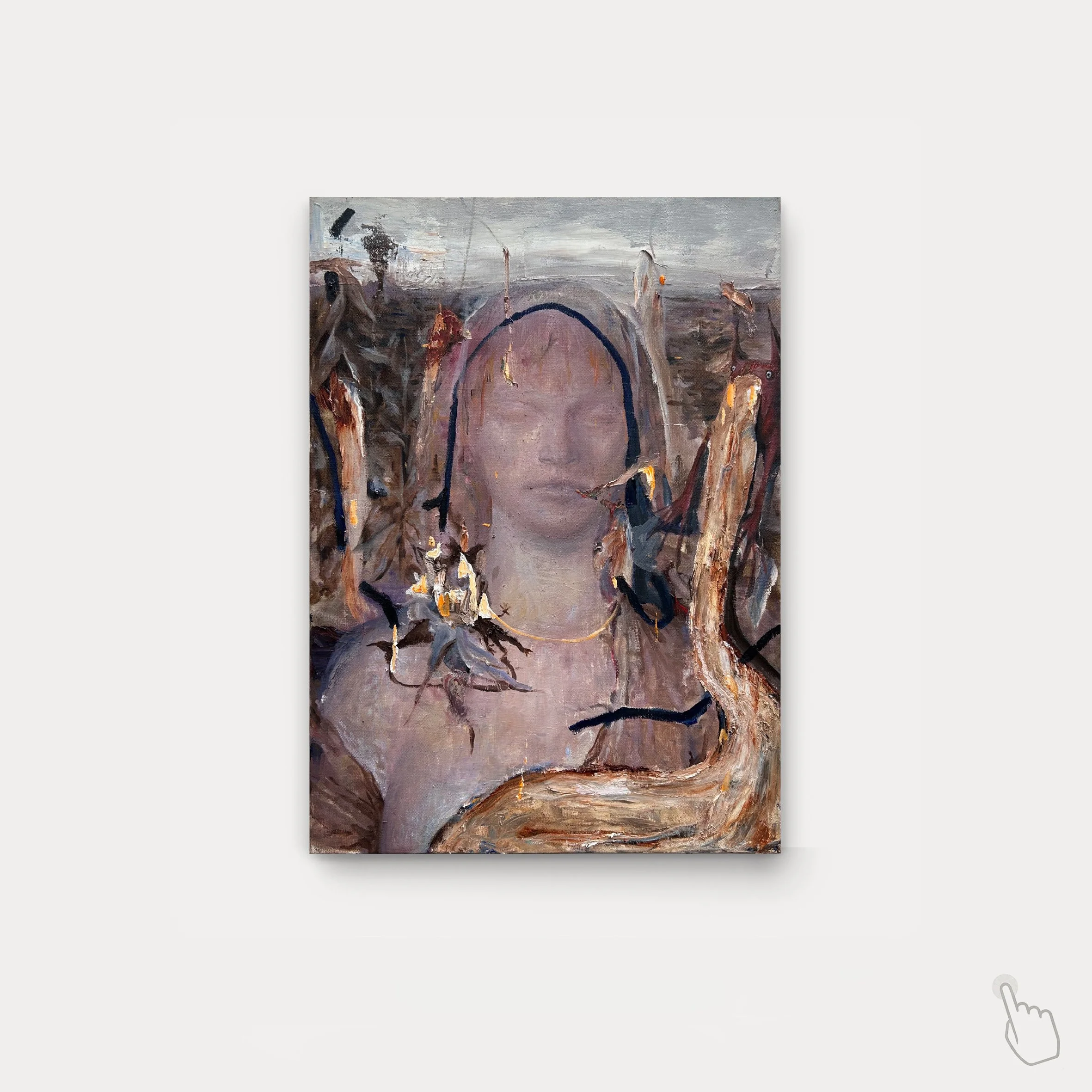
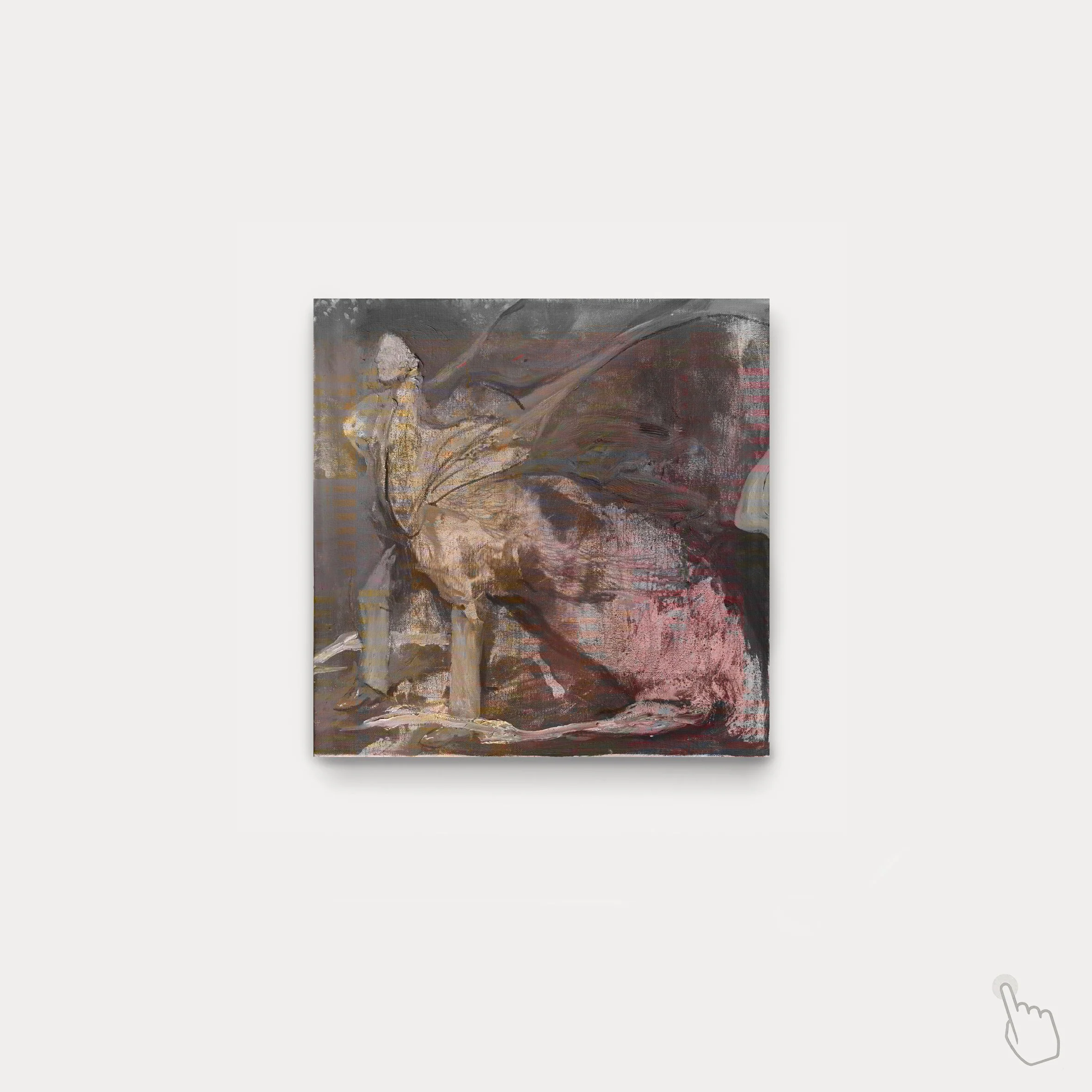
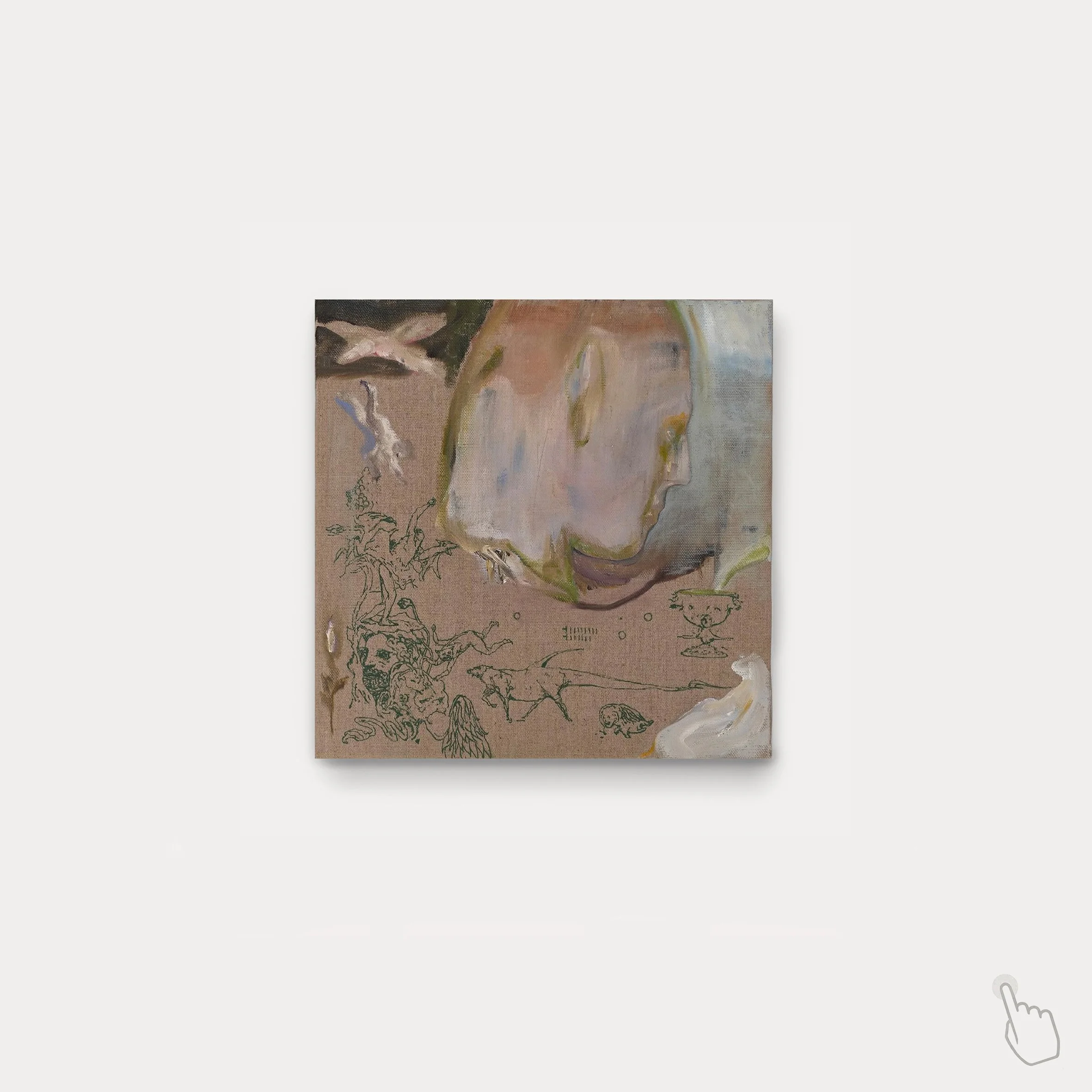
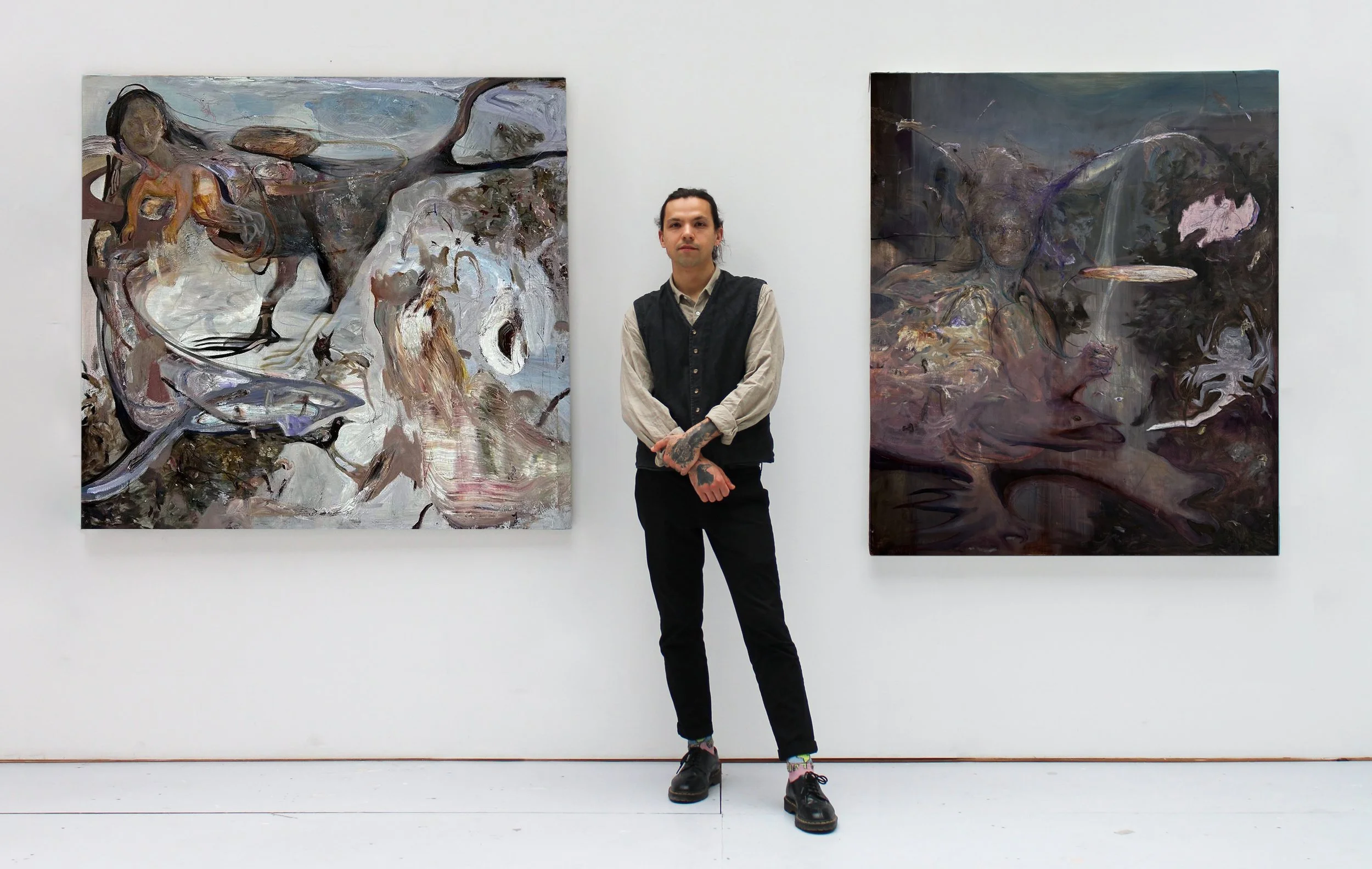
Anima Mundi is delighted to present The Planet of Giant Grasshoppers, the inaugural solo exhibition of Ukrainian artist Oleksii Shcherbak at the gallery.
Autobiography is often understood as an act of faithful recollection, yet Shcherbak proposes something more ambiguous. For him, the deepest truths are not recovered through documentation or description, but through invention. Since childhood, he has returned to an imagined world populated by improbable creatures, unfamiliar figures and mutable landscapes, finding within the imaginary a language capable of expressing experiences that realism alone cannot contain. Rather than offering an escape from reality, perhaps this invented world reveals a deeper autobiographical truth; one in which memory, longing, fear and revelation are not merely remembered, but reimagined...
Autobiography is often understood as an act of faithful recollection, yet Shcherbak proposes something more ambiguous. For him, the deepest truths are not recovered through documentation or description, but through invention. Since childhood, he has returned to an imagined world populated by improbable creatures, unfamiliar figures and mutable landscapes, finding within the imaginary a language capable of expressing experiences that realism alone cannot contain. Rather than offering an escape from reality, perhaps this invented world reveals a deeper autobiographical truth; one in which memory, longing, fear and revelation are not merely remembered, but reimagined...
Read more/less
Shcherbak's figures are often distorted, but never grotesque. They possess an unmistakable vulnerability and deep humanity, encountering grace through instability. Seeking beauty within conflict or disturbance becomes a continual balancing act - echoing something fundamental about the human condition: that certainty remains elusive, and meaning is rarely fixed. Like Beckett's protagonists who “...must go on...can't go on… go on" or Kafka's characters who inhabit realities whose logic forever eludes them, Shcherbak's characters persist not because ambiguity is resolved, but because it must be lived with. His hybrid creatures become vehicles through which emotional landscapes emerge—worlds that defy conventional logic while revealing emotional and autobiographical truths that direct representation often struggles to reach. In evoking these timeless narrative structures, Shcherbak places his work within a broader conversation about journeying—not simply as physical movement, but as a a human need, a creative necessity and a spiritual condition. His protagonists move not towards answers, but towards a deeper ambiguity, or lack of understanding where beauty and absurdity meet in the same breath.
Following Russia's full-scale invasion of Ukraine, Shcherbak relocated to Paris to continue his studies at the prestigious École des Beaux-Arts, leaving behind not only his homeland, but family who remain there still. The shadow of that rupture arguably, perhaps inevitably, accompanies these paintings, yet The Planet of Giant Grasshoppers is remarkable not because it speaks of exile, but because it speaks of continuity. The imagined world that has accompanied the artist since childhood has endured, quietly absorbing lived experience without surrendering its essential character. Here, imagination is neither a refuge from reality nor its opposite. Instead, it becomes a means of carrying experience forward, preserving continuity even as life itself is continually transformed.
Joseph Clarke, 2026

“An event may be small and insignificant in its origin, and yet, when drawn close to one’s eye, it may open in its center an infinite and radiant perspective because a higher order of being is trying to express itself in it.”
ONLINE CATALOGUE :
THE PLANET OF GIANT GRASSHOPPERS
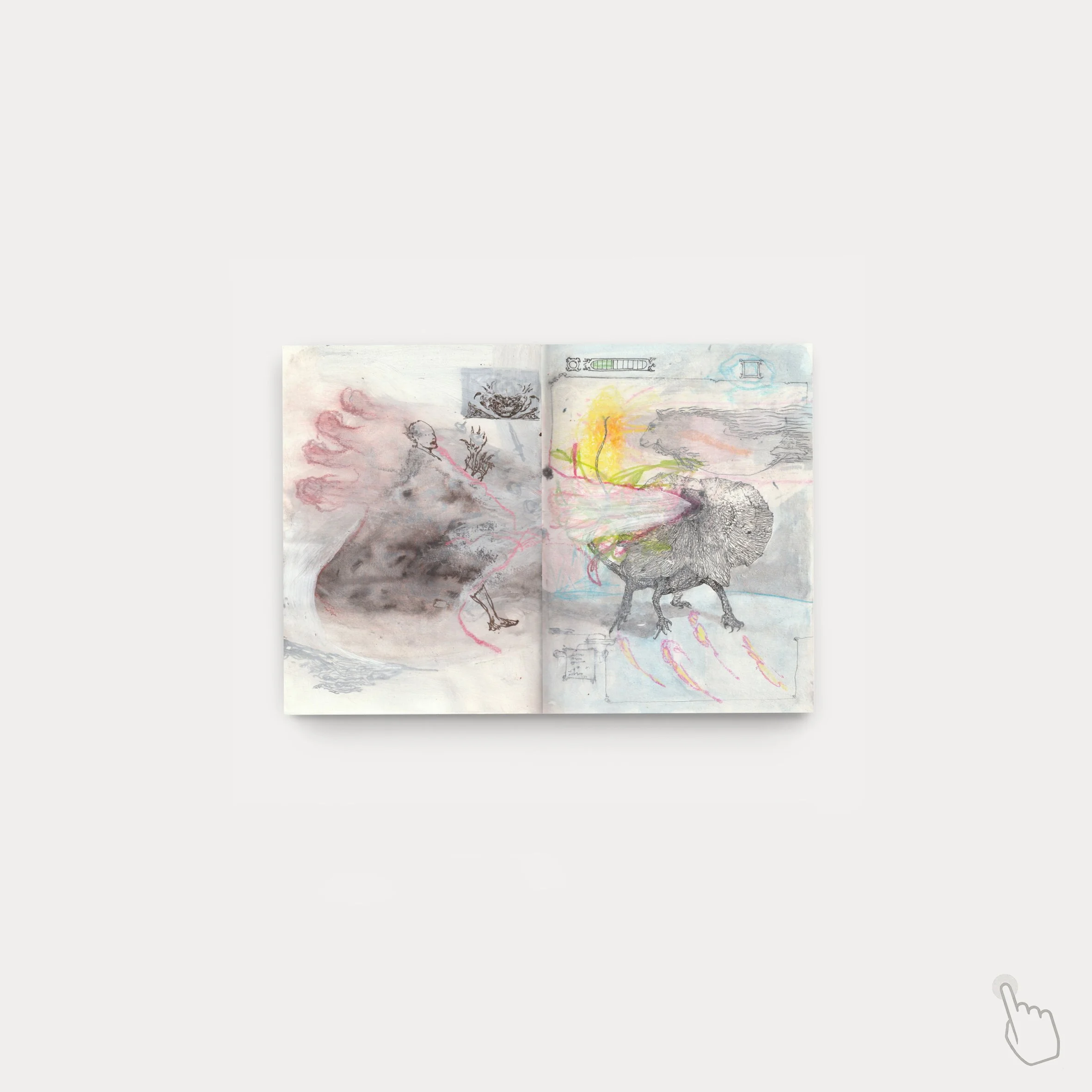
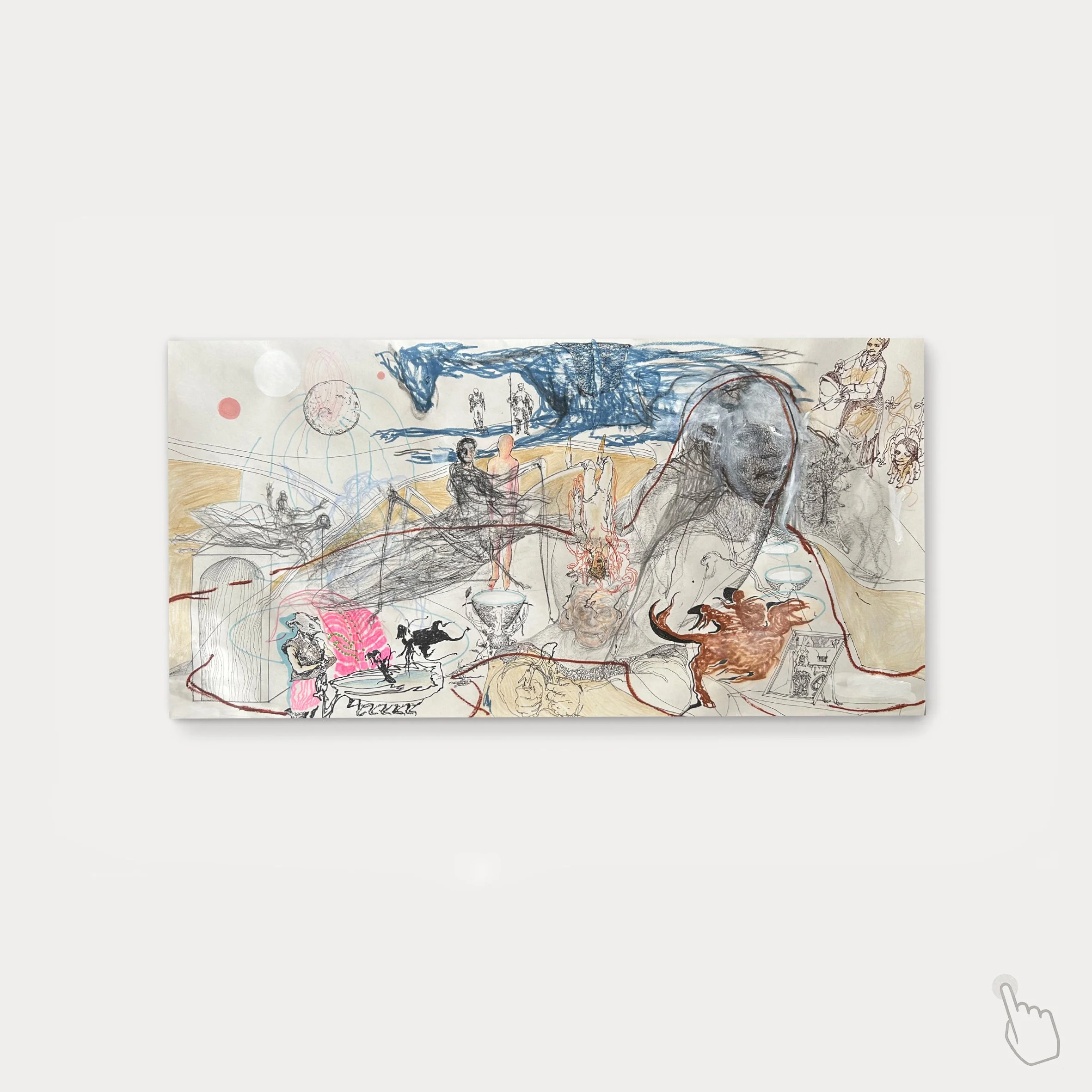
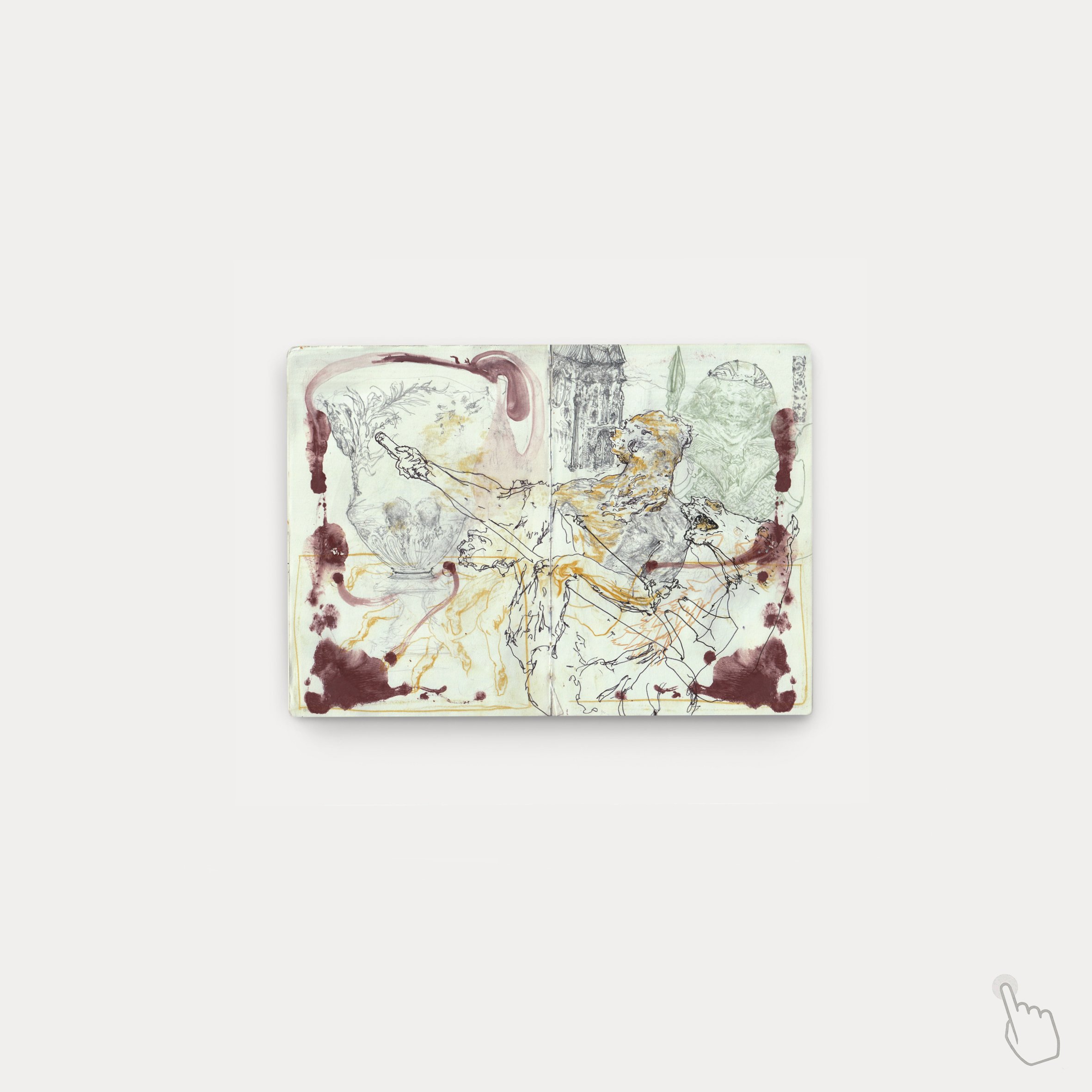
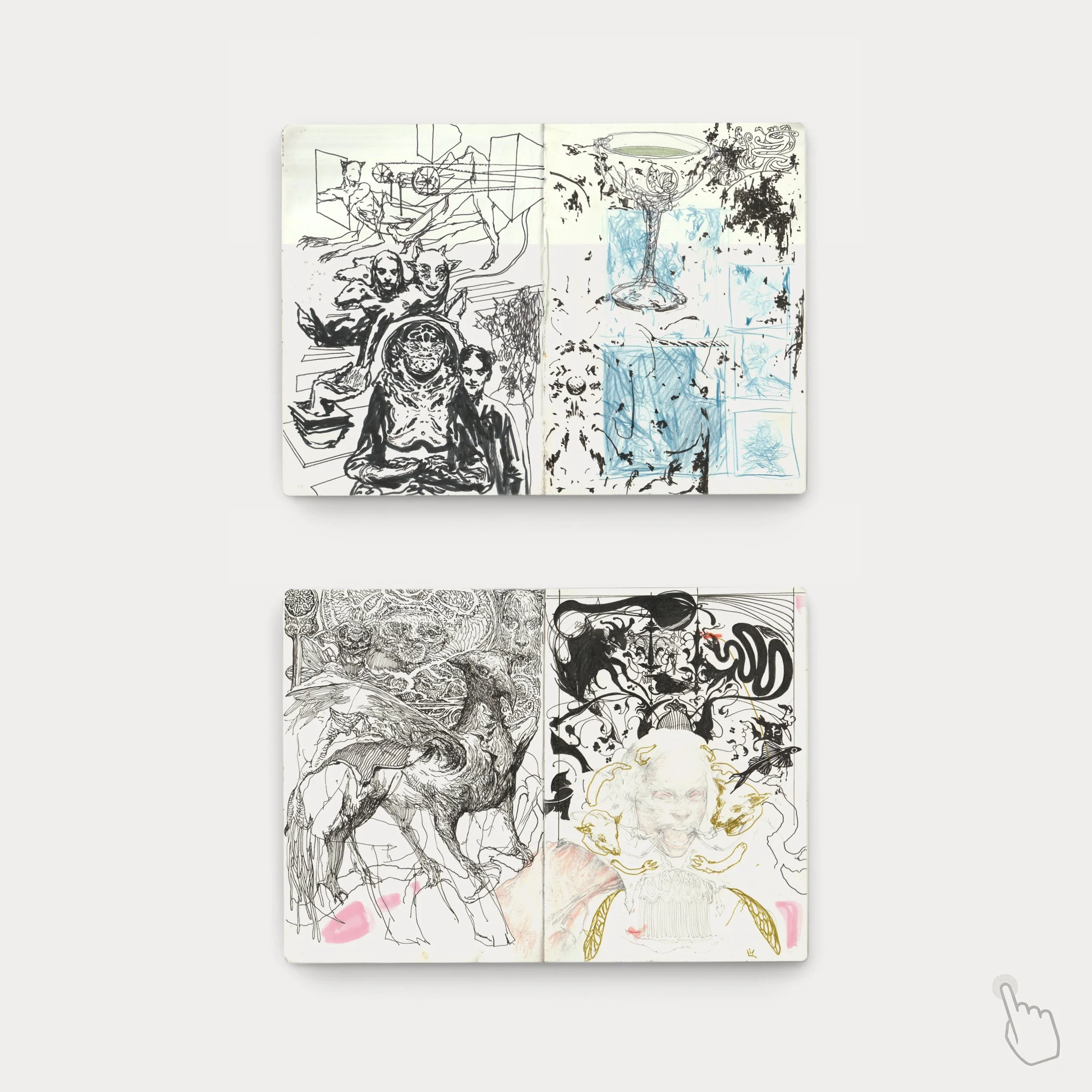
Around the turn of the millennium, in a town rebuilt through labour and a pragmatic desire for conformity, liberated from its former structure and suppressive order yet carrying traces of it in every detail, time was devoted to those essential things such as subsistence and vanishing.On the bar of a metal construction firmly drilled into the ground, predictably intended for carpet cleaning rather than flying, two little ones of a freer generation, astonished by the sadness of the one before them, sat for hours.
We’re in the game now.
The spaceship followed the trajectory of a row of panel houses, trying not to lose its course and to keep the expedition safe. The two boys did not yet know that the planet they were about to reach belonged to giant grasshoppers. It became clear that the universe had no limits, and the farther you travelled, the more there was to discover. You only hoped not to get thirsty, because that would mean returning home for water, and there were many reasons an expedition could be interrupted...
We’re in the game now.
The spaceship followed the trajectory of a row of panel houses, trying not to lose its course and to keep the expedition safe. The two boys did not yet know that the planet they were about to reach belonged to giant grasshoppers. It became clear that the universe had no limits, and the farther you travelled, the more there was to discover. You only hoped not to get thirsty, because that would mean returning home for water, and there were many reasons an expedition could be interrupted...
Read more/less
A fabulous landscape kept unfolding as imagined heroes replaced the absent ones..
By revisiting the storylines of the worlds he invented with a childhood friend, Oleksii treats fiction as a tool for navigating experience..
Turning to drawings of characters and maps created back then, the artist reworks a personal system of signs through which reality and invention gradually become inseparable..
Returning to the fearless logic of childhood, Oleksii continues to work with memory as a central element of his practice. Invented mythologies become a means of seeking connections and moments of balance amid contradictions of lived reality.
.
Valeriia Vertii, 2026
EXHIBITION ARTWORKS (CLICK FOR FULL DETAILS) :
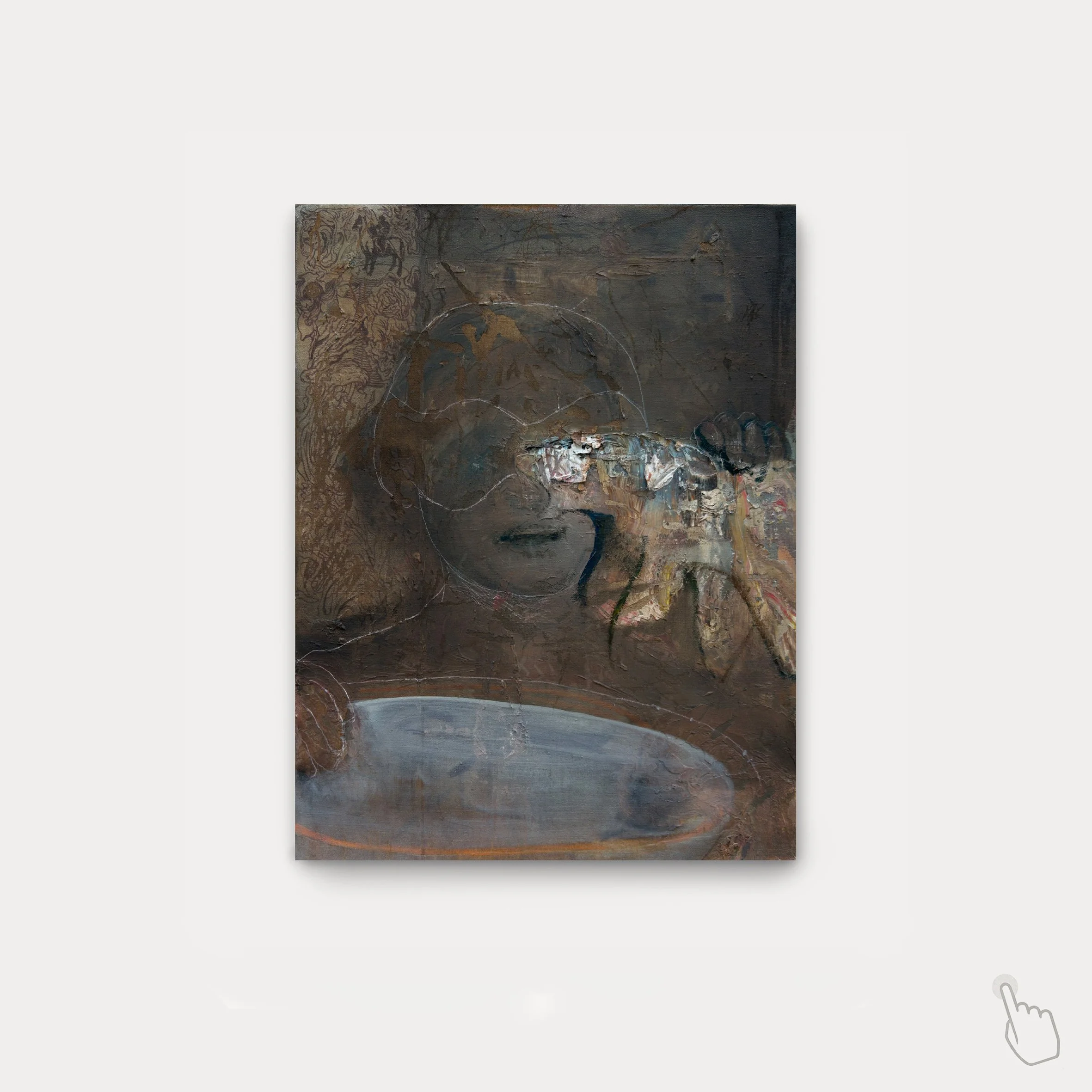
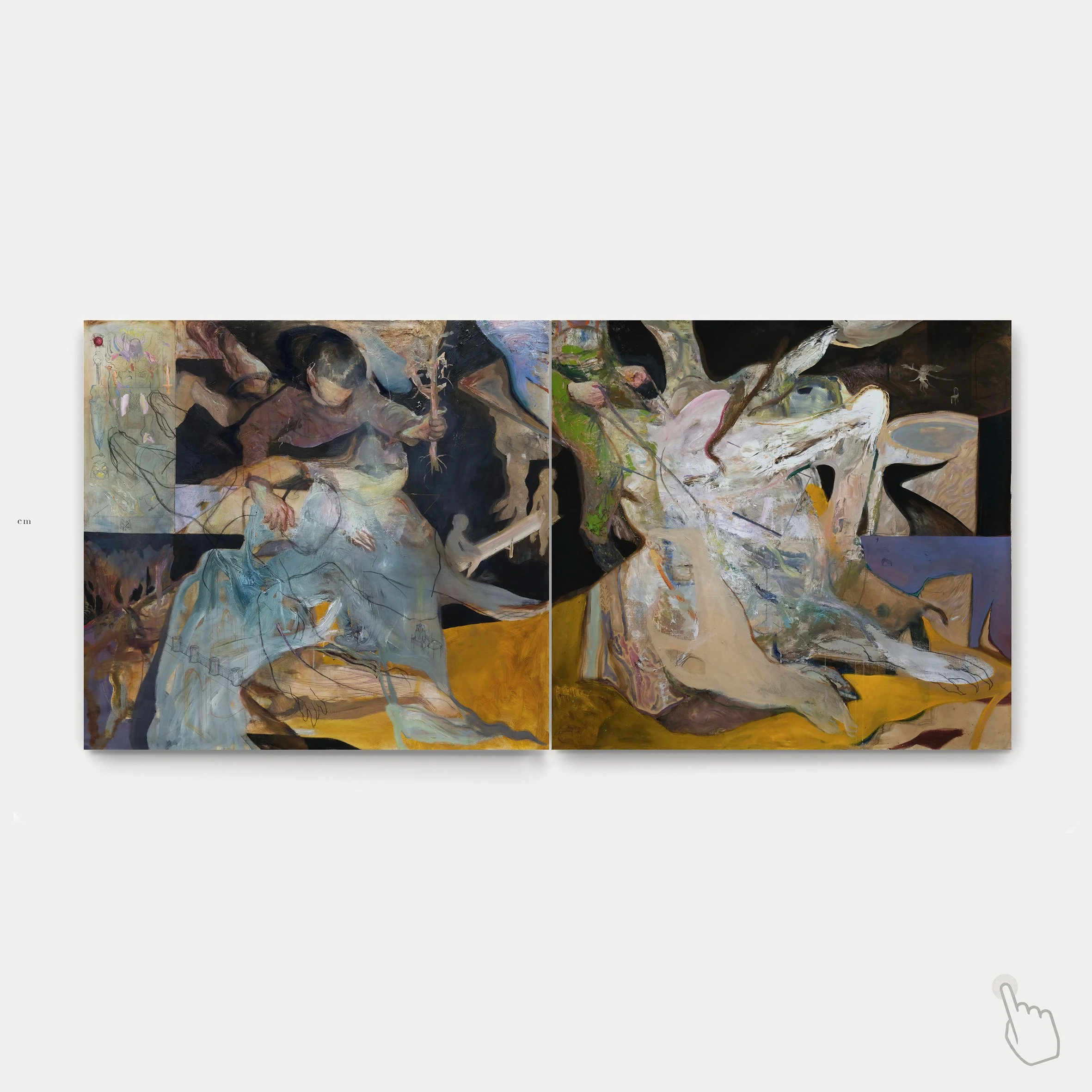
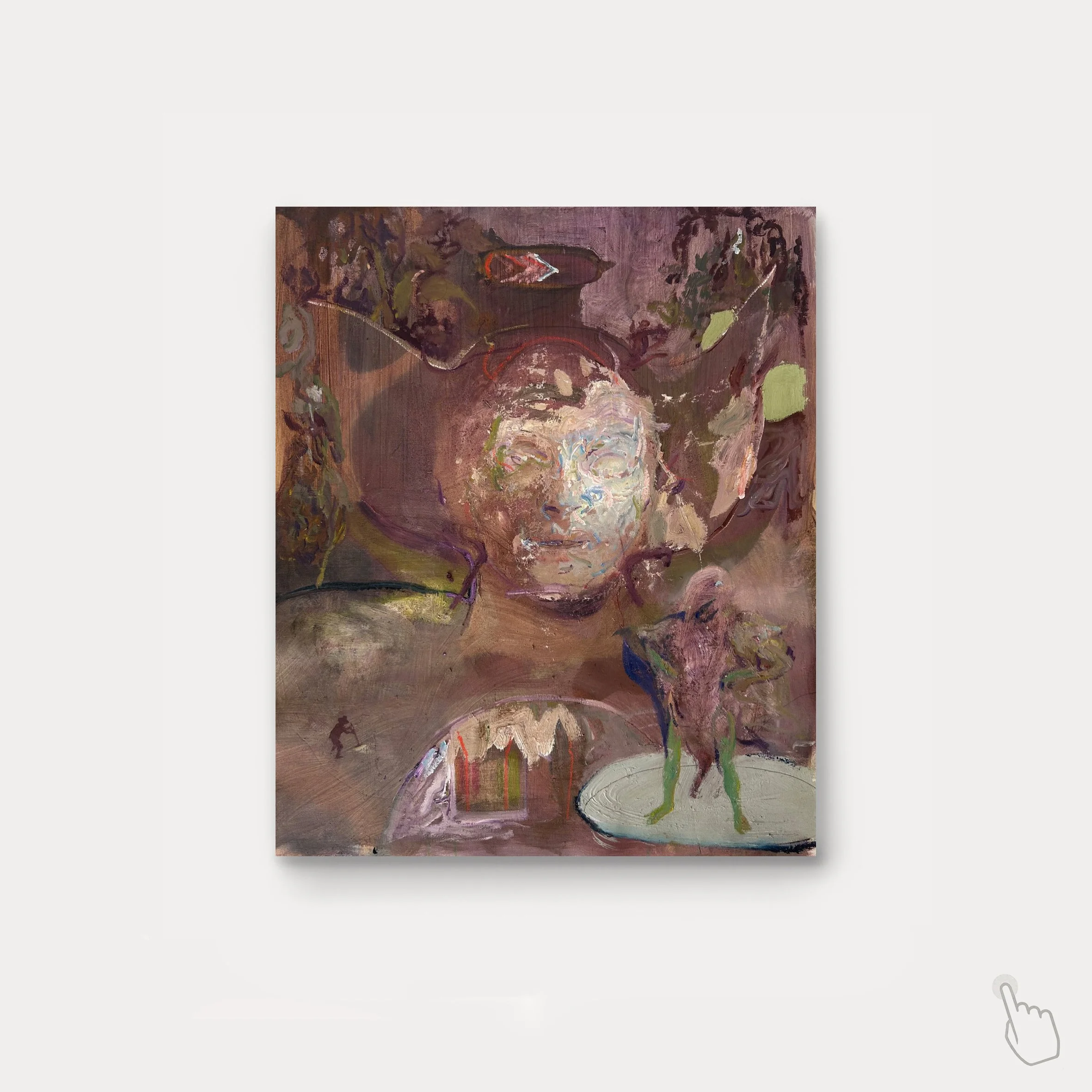
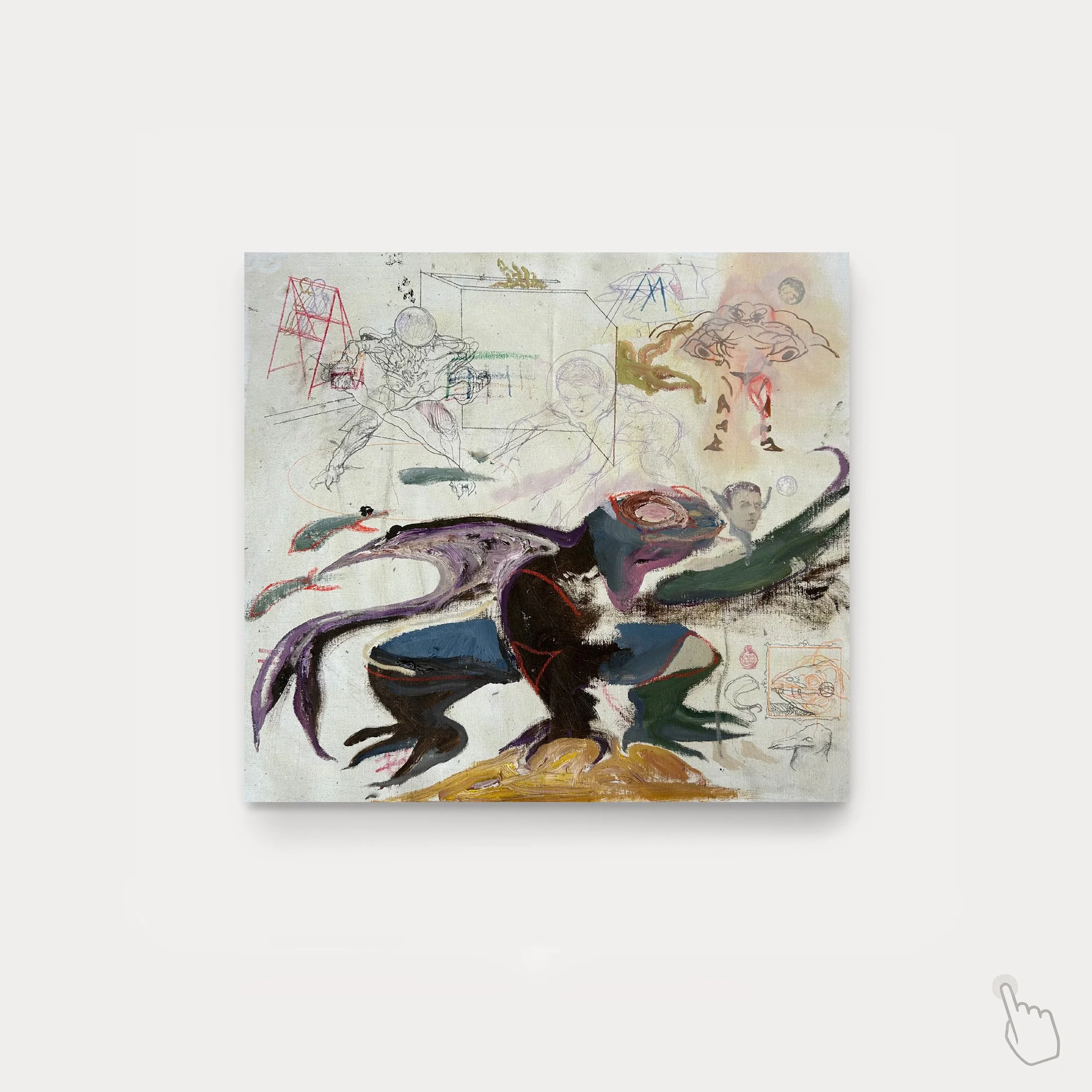
BIOGRAPHY :
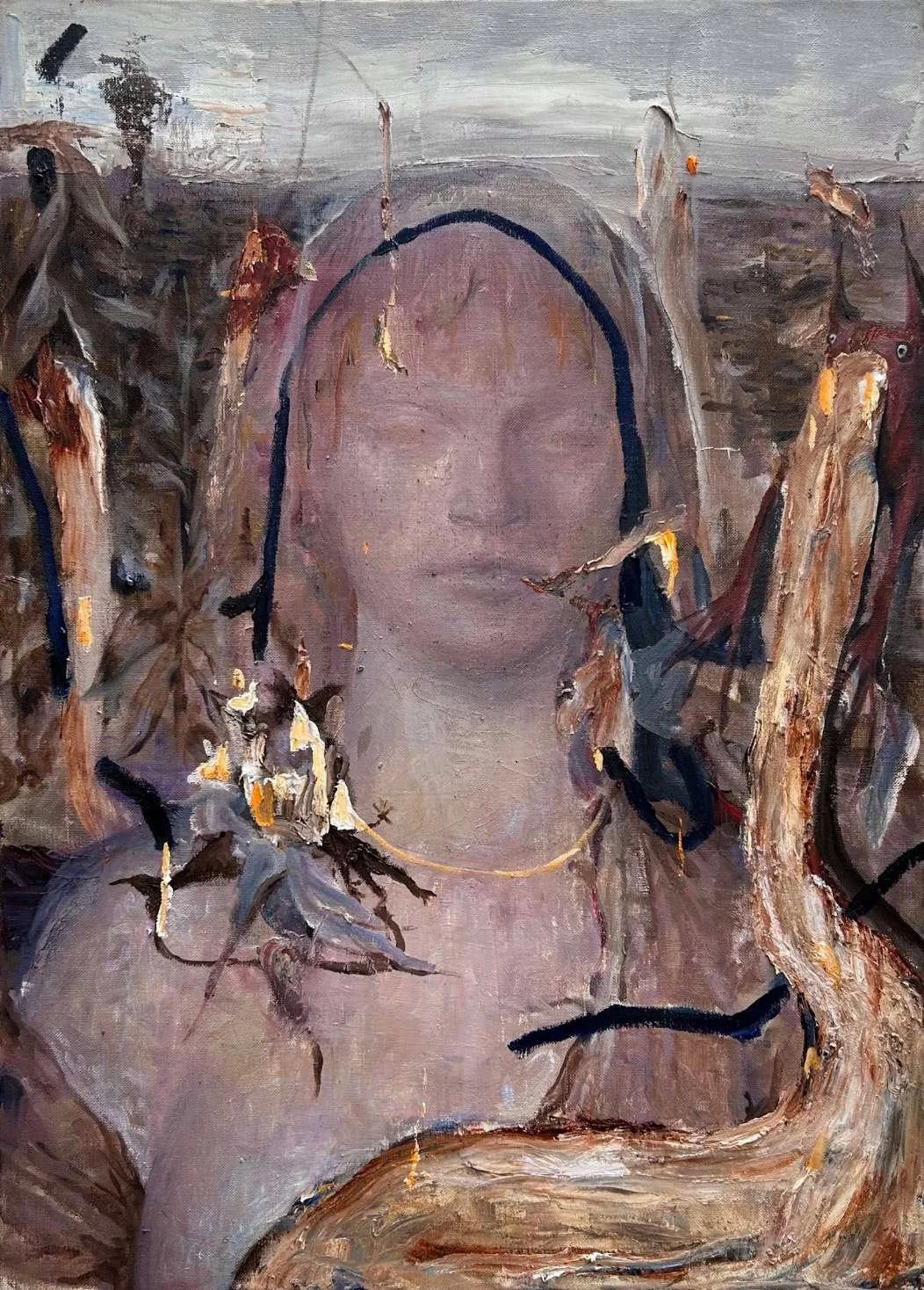
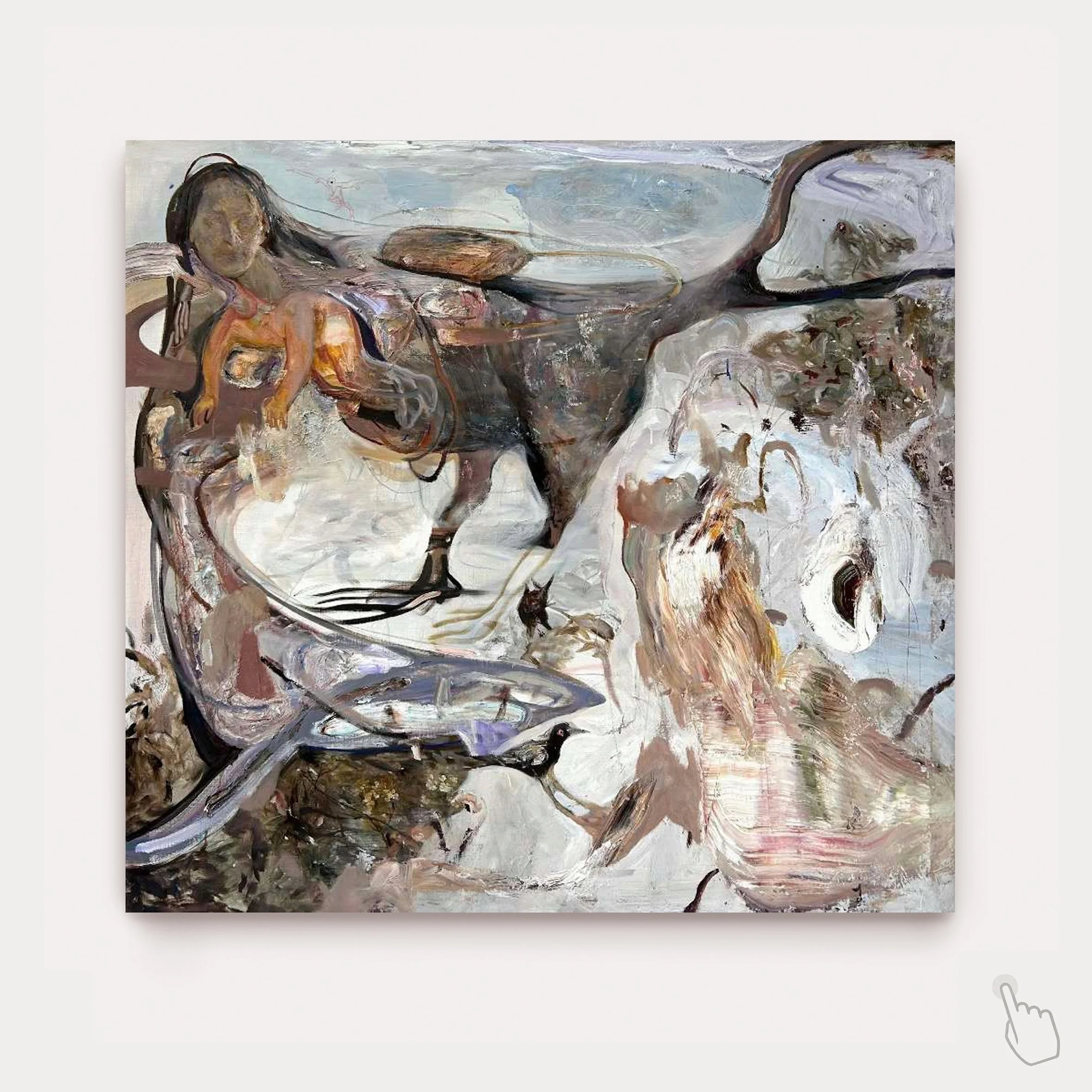
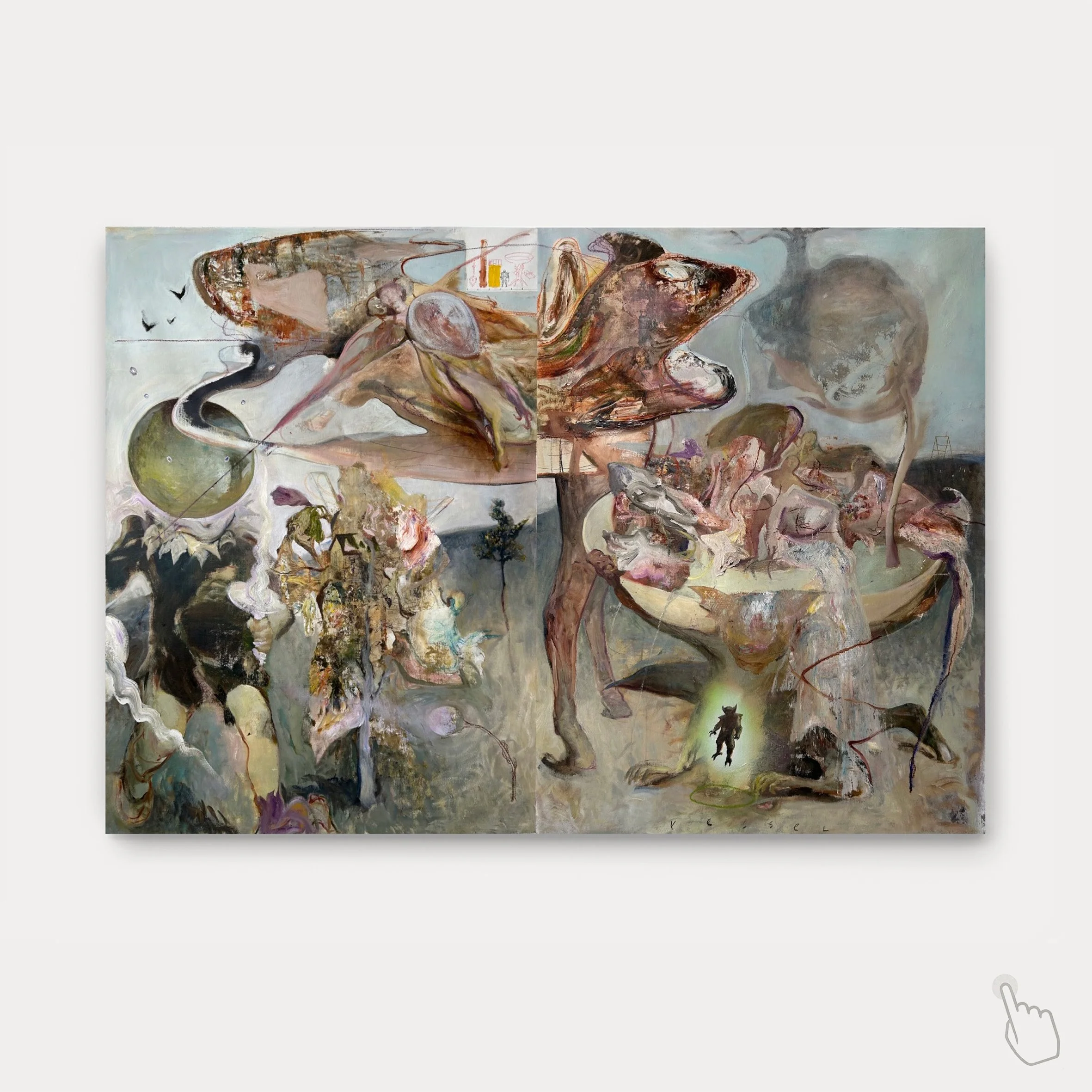
Oleksii Shcherbak is a Ukrainian-born, Paris-based artist creating poetic, otherworldly visions through painting and drawing. His practice is grounded in process-driven figuration with sentimental, mythic characters - cosmic exiles navigating strange emotional landscapes. His style rethinks traditional portraiture, exploring memory, nostalgia, and the surreal contradictions of time and identity.
Shcherbak graduated from L’école des Beaux-Arts in 2025, and holds degrees in easel painting and free graphics from National Academy of Fine Arts and Architecture (NAFAA), Kyiv. In 2025 Shcherbak opened a solo exhibition at the Corridor Foundation, Shenzhen, where he has previously featured in the group exhibitions Mystical Me (2025) and The Sphere of Reality and Fantasy (2024). Other recent solo exhibitions include Victims of Grenouilles, Rukh Art Hub & Mriya Gallery, Tribeca, New York (2024) and Oleksii Shcherbak, Test Gallery, Barcelona, Spain (2023). Selected group exhibitions include Animal at Anima Mundi (2025), Crash, at Ecole des Beaux-arts, group exhibition Paris (2023),Point of Time, ImagineArt gallery, Barcelona (2022), and Studio Iron at Saatchi Yates, London curated by Isamaya Ffrench (2026) among others. His works are held in numerous private collections internationally.
Artist : Oleksii Shcherbak
Title : Flying on a Dragon
Medium : oil on canvas
Dimensions : 73 x 60 cm
ENQUIRE ABOUT THIS WORK