EXHIBITION DATES : In person and online from 17/7 – 4/9

INTRODUCTION :
Anima Mundi are delighted to present 'To Set the Darkness Echoing’, Claire Curneen's second solo exhibition at the gallery.
Darkness is often imagined as an absence: of light, certainty or understanding. Yet it is equally a place of profound presence. It is where memory lingers after those we love have departed, where grief continues to speak long after language has failed, and where faith exists not as conviction but as the willingness to remain attentive to mystery.
Claire Curneen's sculptures inhabit this contemplative territory, resisting spectacle, choosing instead the quiet authority of stillness. These figures rarely proclaim or perform emotion; rather, they are imbued with it, holding themselves, caught within a moment of grace. It is through an economy of expression that the work attains its remarkable emotional weight. These sculptures do not tell us what or how to feel. Instead, they create a space in which our own experiences of tenderness, loss, hope and longing are gently returned to us....
Darkness is often imagined as an absence: of light, certainty or understanding. Yet it is equally a place of profound presence. It is where memory lingers after those we love have departed, where grief continues to speak long after language has failed, and where faith exists not as conviction but as the willingness to remain attentive to mystery.
Claire Curneen's sculptures inhabit this contemplative territory, resisting spectacle, choosing instead the quiet authority of stillness. These figures rarely proclaim or perform emotion; rather, they are imbued with it, holding themselves, caught within a moment of grace. It is through an economy of expression that the work attains its remarkable emotional weight. These sculptures do not tell us what or how to feel. Instead, they create a space in which our own experiences of tenderness, loss, hope and longing are gently returned to us....
Read more/less
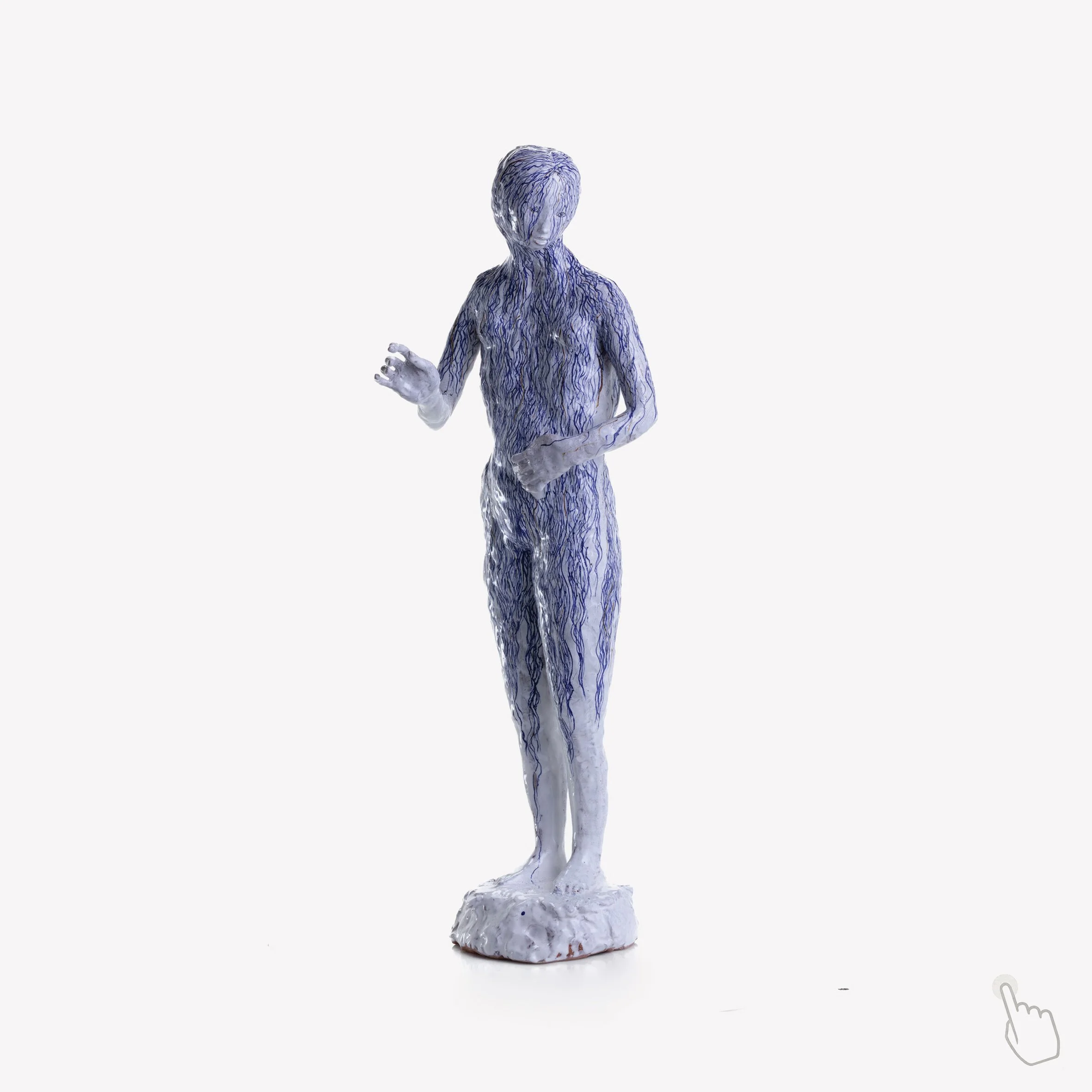
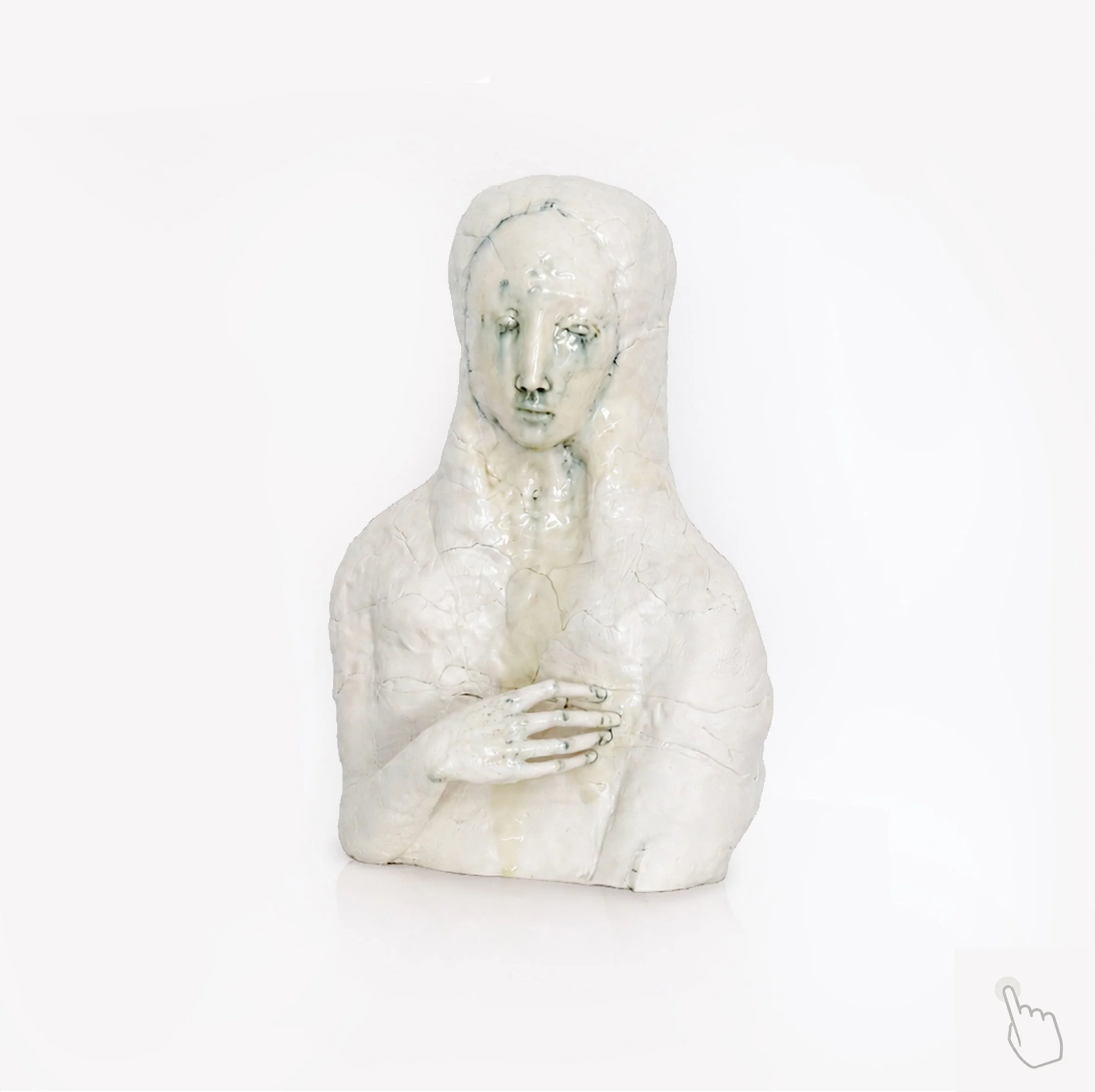
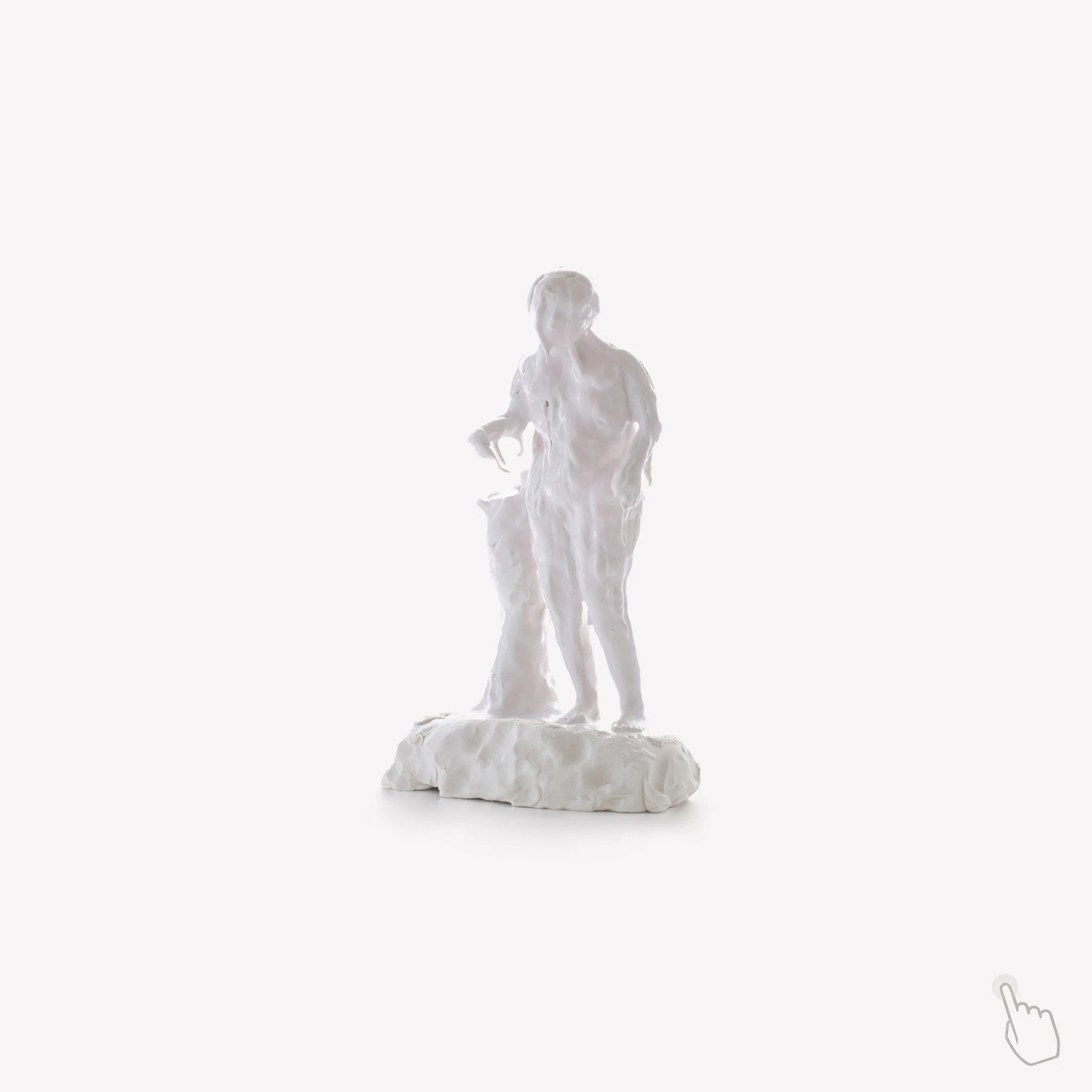
The human figure remains central to Curneen's practice, existing beyond the specificity of individual identity, instead occupying an ambiguous threshold between the earthly and the transcendent, the temporal and the eternal. They appear at once ancient yet immediate, vulnerable yet enduring, their quiet presence suggesting that the sacred is not encountered beyond the human condition but through it.
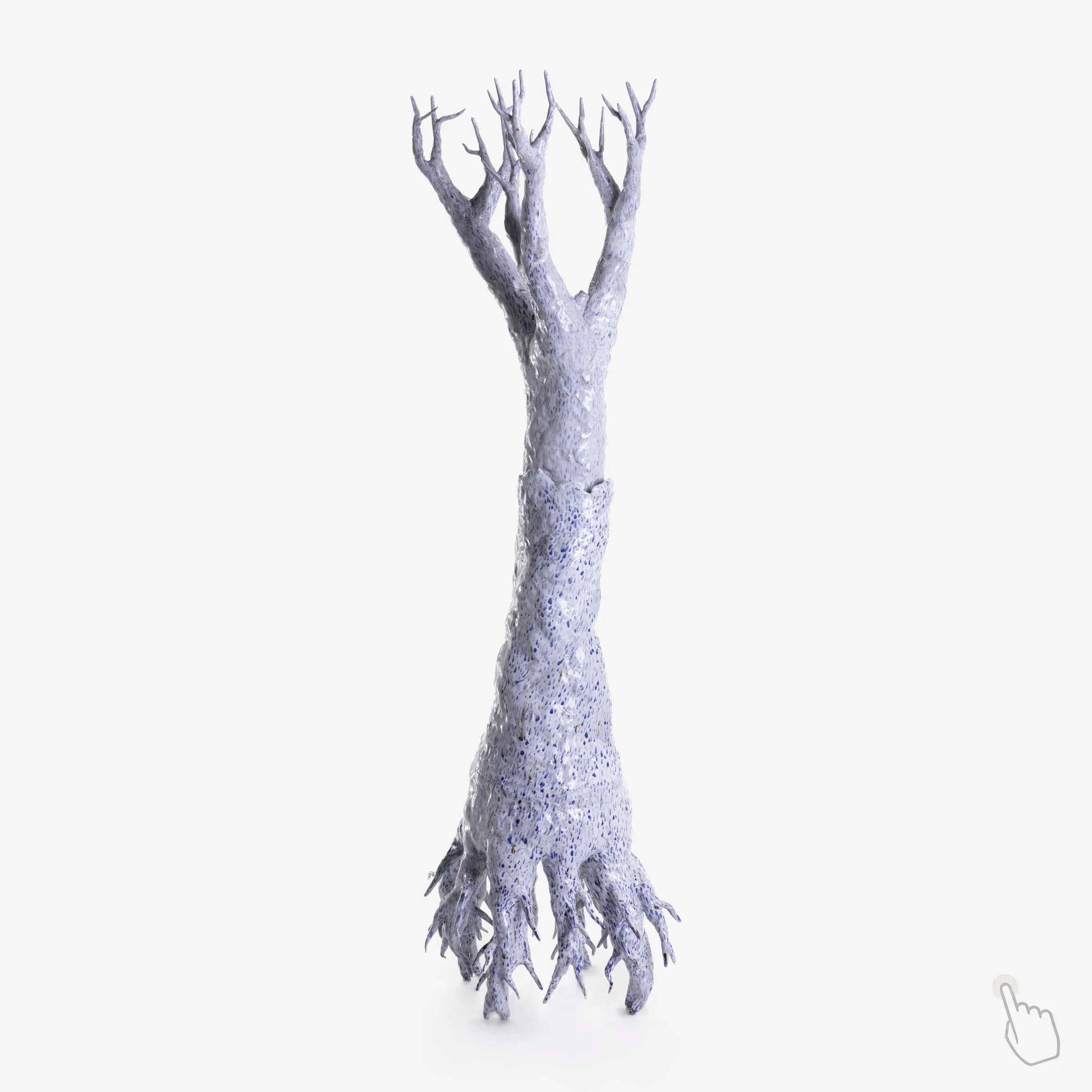
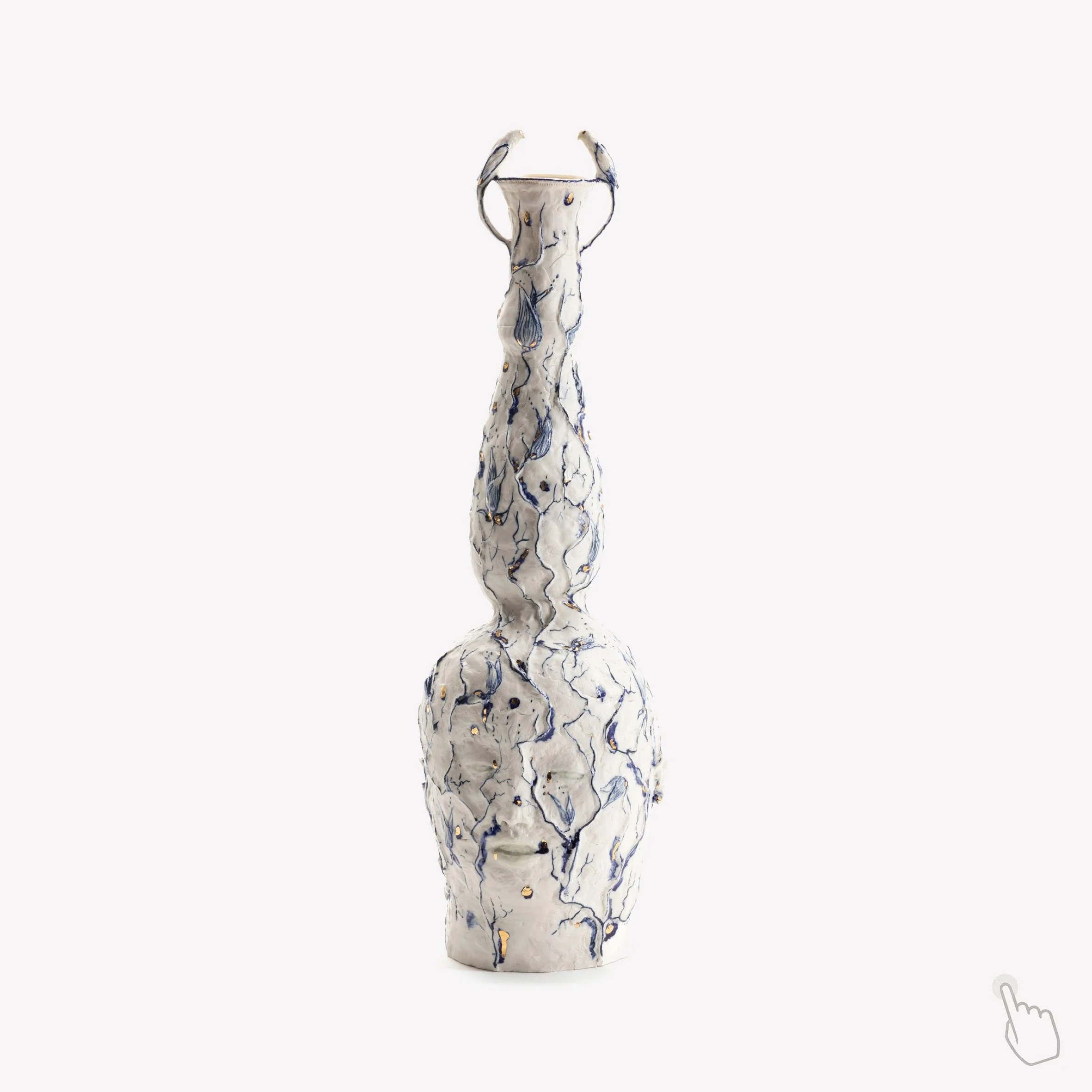
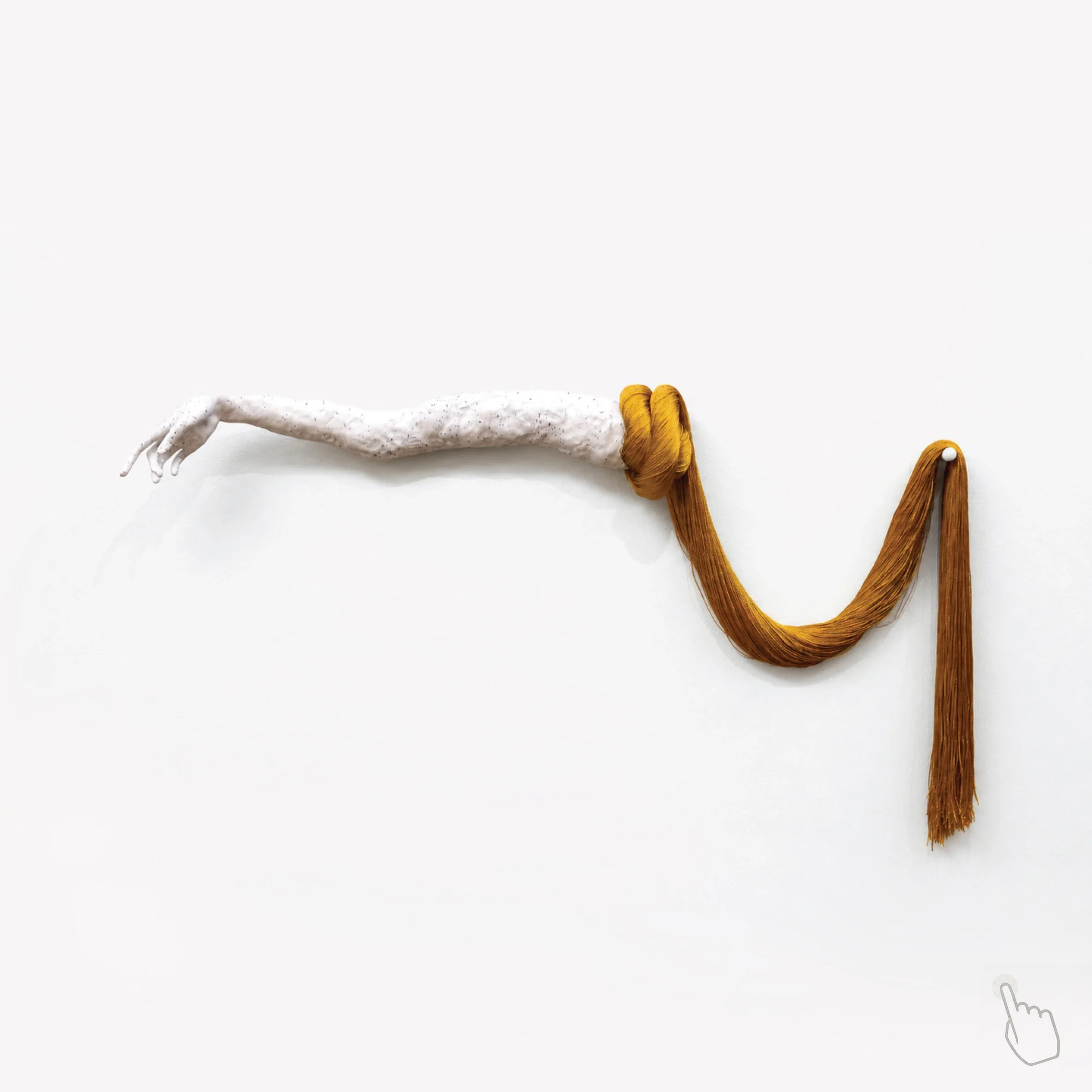
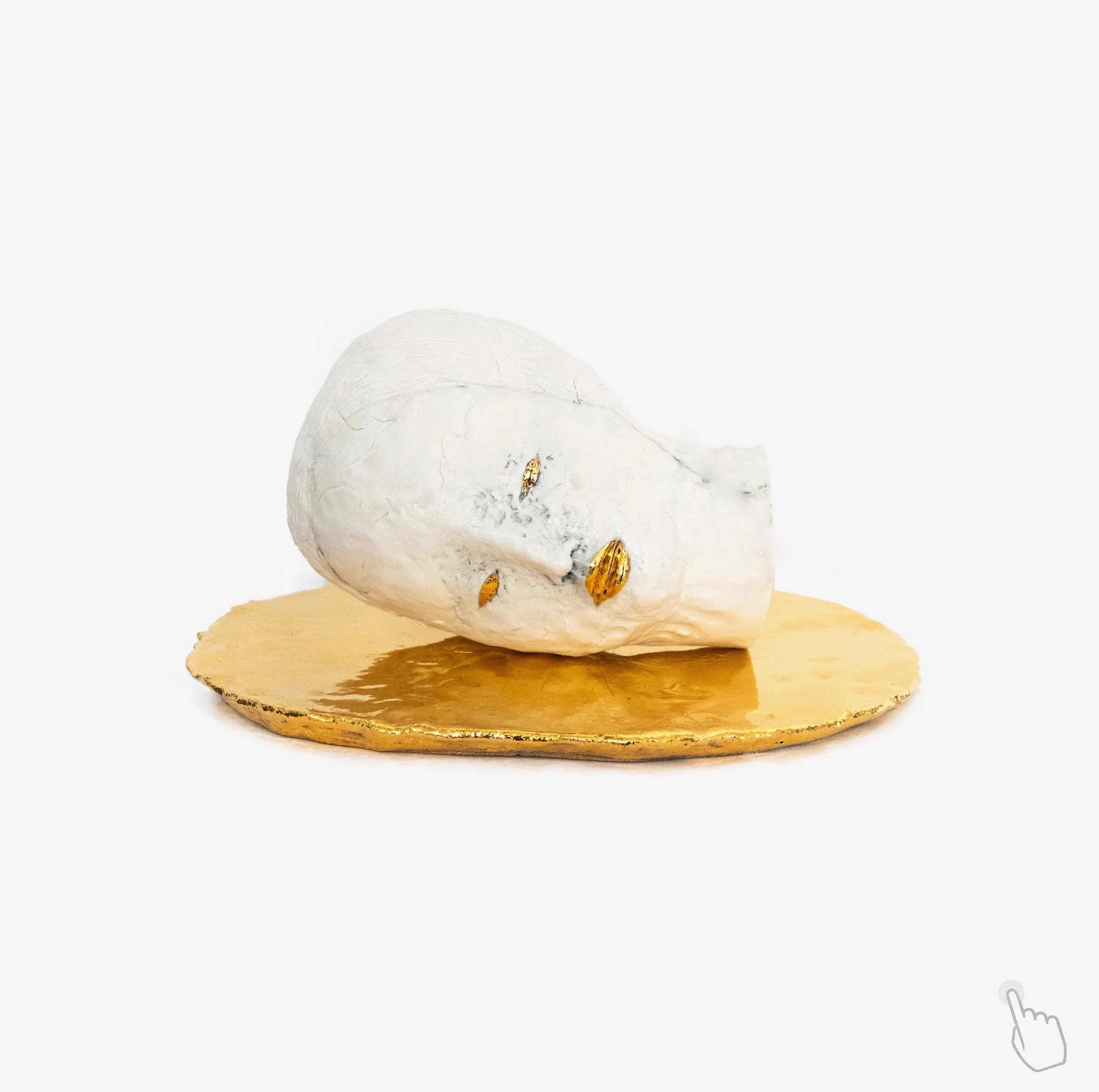
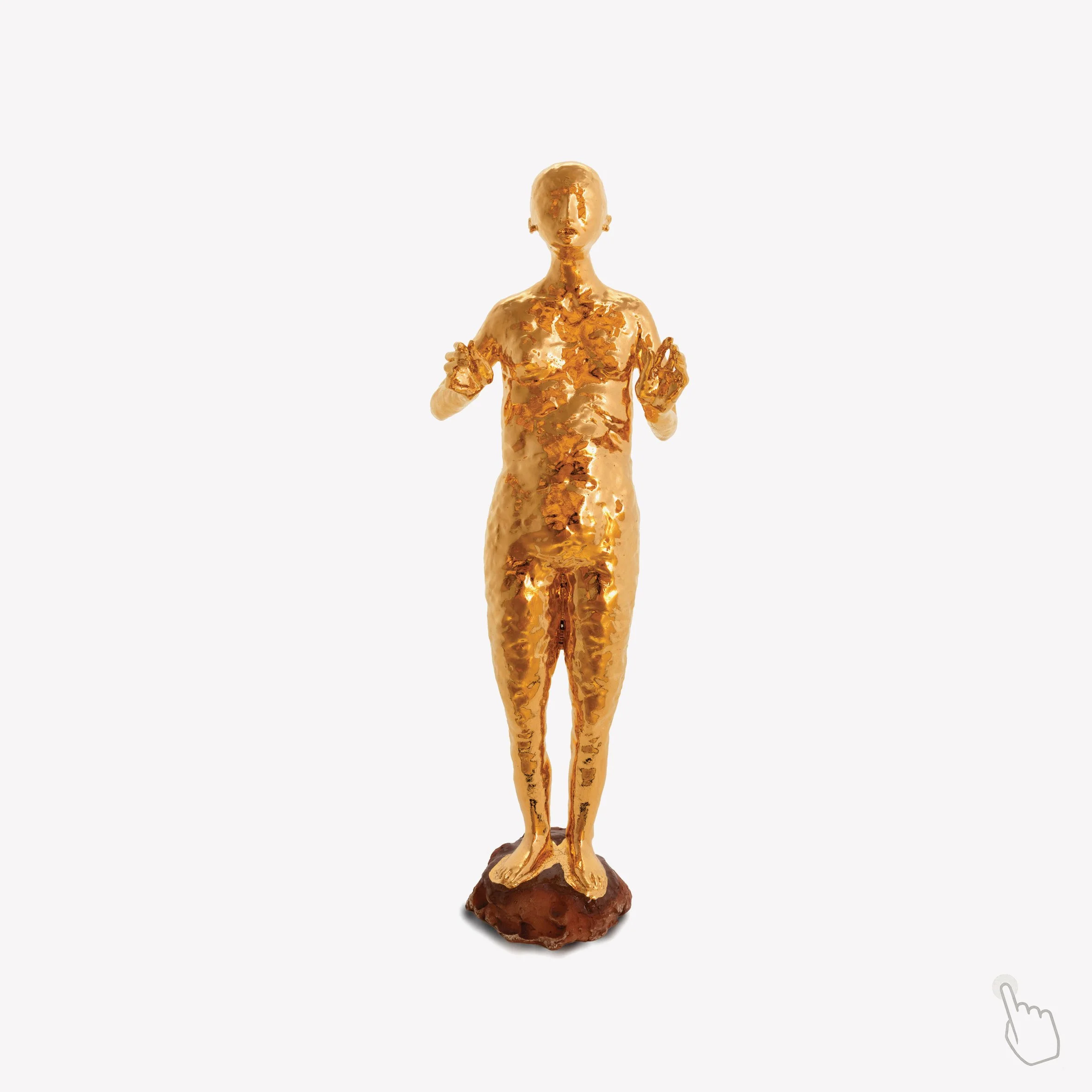
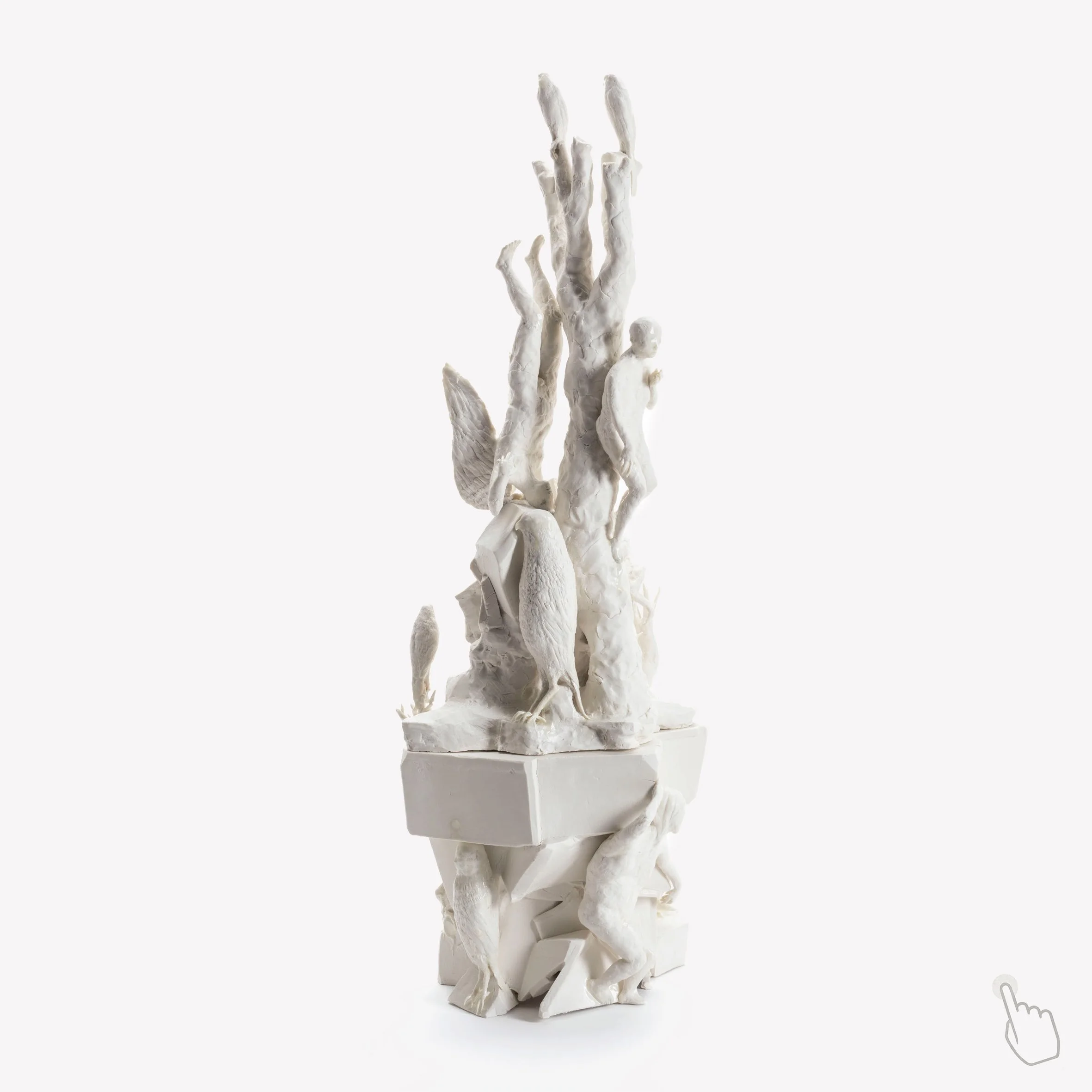
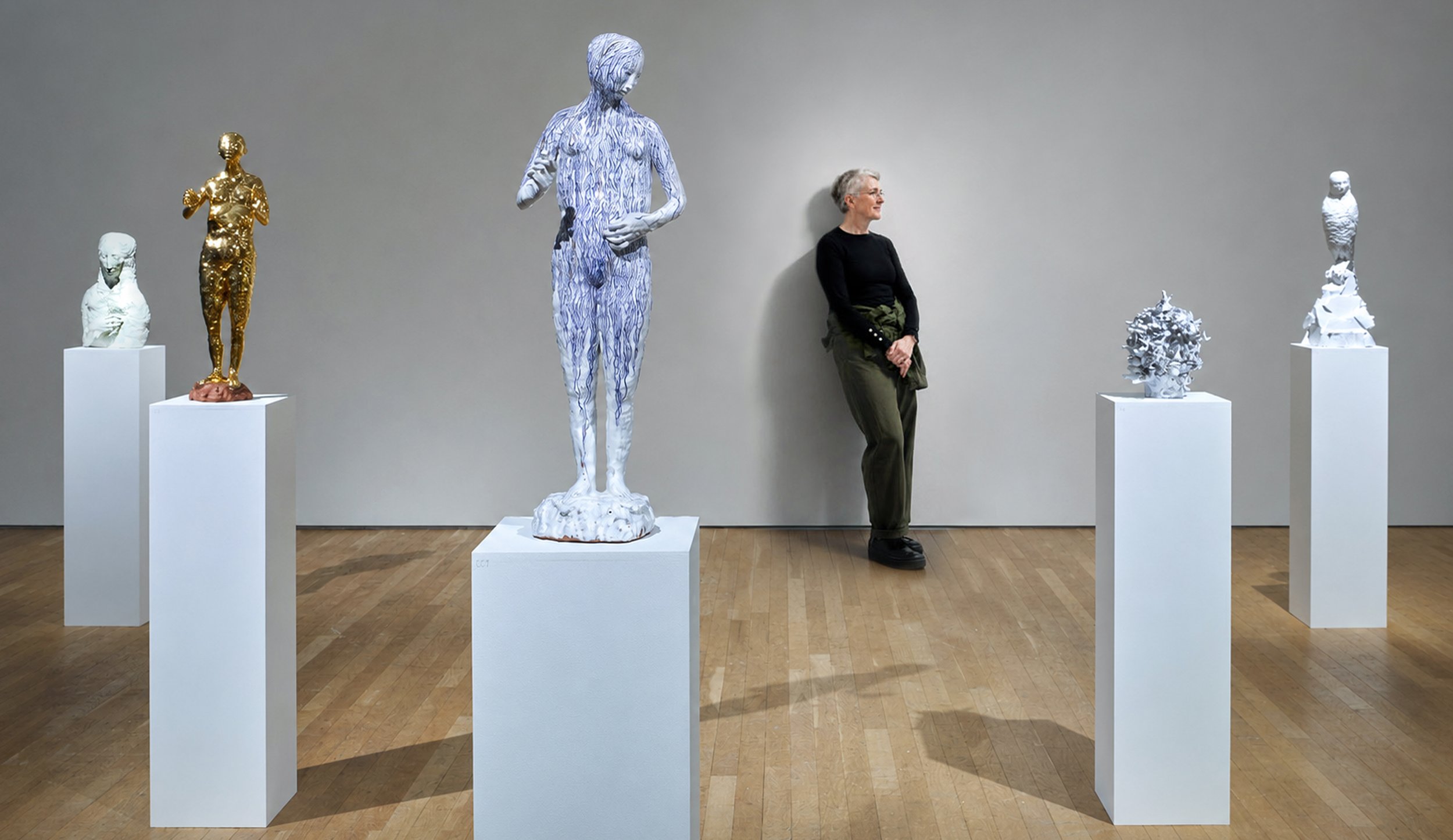
As with Heaney, for Claire, meaning doesn't originate from an ethereal void. It is born from beneath feet - from wet mud. Material itself becomes inseparable from concept. Before it becomes vessel, relic or figure, clay is simply earth held in the hand. Clay - whether porcelain, terracotta or stoneware - carries distinct physical and symbolic resonance. Porcelain possesses an almost paradoxical nature: simultaneously resilient and fragile, capable of remarkable strength while retaining a translucence and delicacy that recalls skin, bone or the mutability of flesh. Terracotta remains visibly tethered to the earth from which it came, while darker stoneware introduces a profound gravity, absorbing rather than reflecting light. Together these materials speak of permanence and impermanence, suggesting that our existence is suspended between these two states.
Throughout the exhibition, flashes of gold and fluid passages of glaze emerge sparingly across the figures. The gilded surface creates shivers of light and pools of darkness, rooting and transcending the form. These are never ornamental indulgences. Instead, they recall the visual language of icons and reliquaries, quietly suggesting moments of grace that arise not despite vulnerability but because of it. Anointing with gold neither disguises suffering nor redeems it. It simply acknowledges that what is most fragile may also be most sacred.
Although deeply informed by Christian iconography and the devotional imagery of the early Italian Renaissance, Curneen's sculptures ultimately transcend any singular theological reading. Their concerns, instead, remain intimately human. They speak of birth and death, sacrifice and compassion, exile and belonging, fear and consolation. They remind us that acts of care, tenderness and quiet resilience possess their own profound dignity, even when certainty remains beyond reach.
Perhaps the greatest achievement of these sculptures lies in what they refuse to resolve. They do not offer redemption as conclusion, nor despair as inevitability. Instead, they remain poised within the fragile interval between the two. In their silence there is neither emptiness nor resignation, but attentiveness. They ask us not to conquer uncertainty, but to dwell within it with humility and openness.
In an age increasingly defined by immediacy, noise and the relentless demand for explanation, Curneen offers something increasingly rare: the possibility of sustained contemplation. Her sculptures invite us to slow our gaze, to recognise that meaning often resides not in revelation but in quiet persistence. They remind us that mystery is not a problem awaiting solution but an essential condition of being human.
An echo is not the moment itself - it is what remains after the moment has passed. It is memory made manifest, revealing to us a deep well of space already resonant with compassion and longing. A companion to our own searching in the dark, affirming that even in life's most uncertain passages, something deeper continues to resonate. Fragile, enduring and alive, through their tenderness these profound works offer us hope.
Joseph Clarke, 2026

ONLINE CATALOGUE :
“As a child, they could not keep me from wells
And old pumps with buckets and windlasses.
I loved the dark drop, the trapped sky, the smells
Of waterweed, fungus and dank moss.
One, in a brickyard, with a rotted board top.
I savoured the rich crash when a bucket
Plummeted down at the end of a rope.
So deep you saw no reflection in it.
A shallow one under a dry stone ditch
Fructified like any aquarium.
When you dragged out long roots from the soft mulch,
A white face hovered over the bottom.
Others had echoes, gave back your own call
With a clean new music in it. And one
Was scaresome, for there, out of ferns and tall
Foxgloves, a rat slapped across my reflection.
Now, to pry into roots, to finger slime,
To stare, big-eyed Narcissus, into some spring
Is beneath all adult dignity. I rhyme
To see myself, to set the darkness echoing.”
EXHIBITION ARTWORKS (CLICK FOR FULL DETAILS) :
BIOGRAPHY :
Claire Curneen’s iconic sculptures are poignant contemplations on the liminal and precarious nature of the human condition, exploring themes around death, rebirth and the sublime. Universal and profound states of fear, loss, suffering and sacrifice fuse with devotion, desire, wonder and mystery to underlie each intricate, porcelain figure. Their translucent and fragile qualities offer potent, metaphoric abstract narratives. Porcelain, terracotta and black stoneware creates a grounded vulnerability to these works, with dribbles of glaze and flashes of gold to embelish denoted sacred qualities.
Claire Curneen was born in Tralee, Co. Kerry, Ireland in 1968 and currently lives and works in Wales, UK. Works have been exhibited internationally and appear in many notable Public collections including the Crafts Council, London; Shipley Art Gallery, Gateshead; National Museum & Gallery of Wales, Cardiff; Victoria and Albert Museum, London; The Fitzwilliam Museum, Cambridge; Manchester City Art Gallery, Manchester; National Museum of Scotland, Edinburgh; Aberystwyth Arts Centre, Aberystwyth, Wales; Cleveland Craft Centre, Middlesbrough; Oldham Art Gallery and Museum, Manchester; York City Art Gallery, York; Middlesbrough Institute of Modern Art, Middlesbrough; Crawford Art Gallery, Cork, Eire; Limerick City Gallery of Art, Limerick, Eire; Ulster Museum, Belfast, Northern Ireland; Benaki Museum, Athens, Greece; Clay Studio, Philadelphia, USA; Mint Museum of Craft + Design, Charlotte, North Carolina, USA; Icheon World Ceramic Centre, Gyeonggi-do, Korea; Taipei Ceramics Museum, Taiwan.
Artist : Claire Curneen
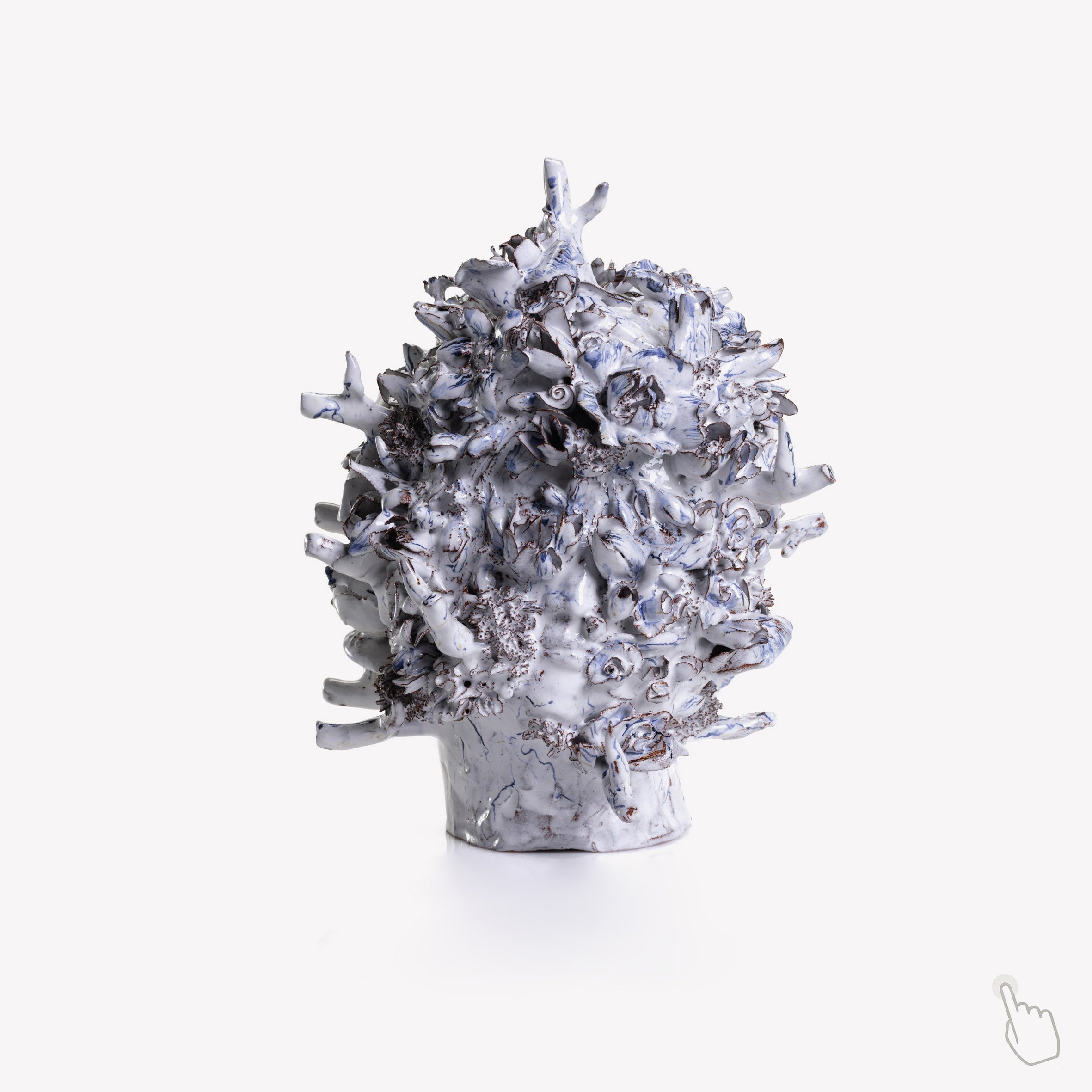
Title : Piercing the Heart
Medium : majolica terracotta
Dimensions : 43 x 65 x 33 cm
ENQUIRE ABOUT THIS WORK